Your cart is empty
Tax included and shipping calculated at checkout
Drawer menu
Tax included and shipping calculated at checkout

Last Updated: October 29, 2026
Quick Summary
Safe nipple care starts with a deep, comfortable latch, since a shallow latch causes most nipple trauma. Use a no-wipe-off balm with a short, plant-based ingredient list after every feed, and treat pain that builds or lasts past the first week or two as a signal to get help rather than push through.
Sore nipples are one of the most common reasons new mothers stop nursing earlier than planned. The first weeks are a learning period for both of you, and tenderness during that window is expected.
At MProve Body, we hear the same worry again and again: "Is this normal, or am I doing something wrong?" Often it is a mix of both.
If you want a fuller breakdown of causes and warning signs, read our guide on why breastfeeding is so painful.
Latch is the single biggest lever you have. A deep, comfortable latch prevents most nipple trauma before it starts. A shallow one causes friction on every single feed.
Signs of a shallow or poor latch:
To improve latch, bring the baby to the breast chin-first, not nipple-first. Aim the nipple toward the roof of the mouth. Wait for a wide, gaping mouth before you bring them in.
Look for a nipple cream with a short ingredient list and one you can leave on before feeding.
Look for plant-based oils and butters that create a barrier and hold moisture in. Our own PureLatch botanical nipple balm is built on olive oil, coconut oil, shea butter, cocoa butter, sunflower oil, jojoba oil, marshmallow, chamomile, and vitamin E.

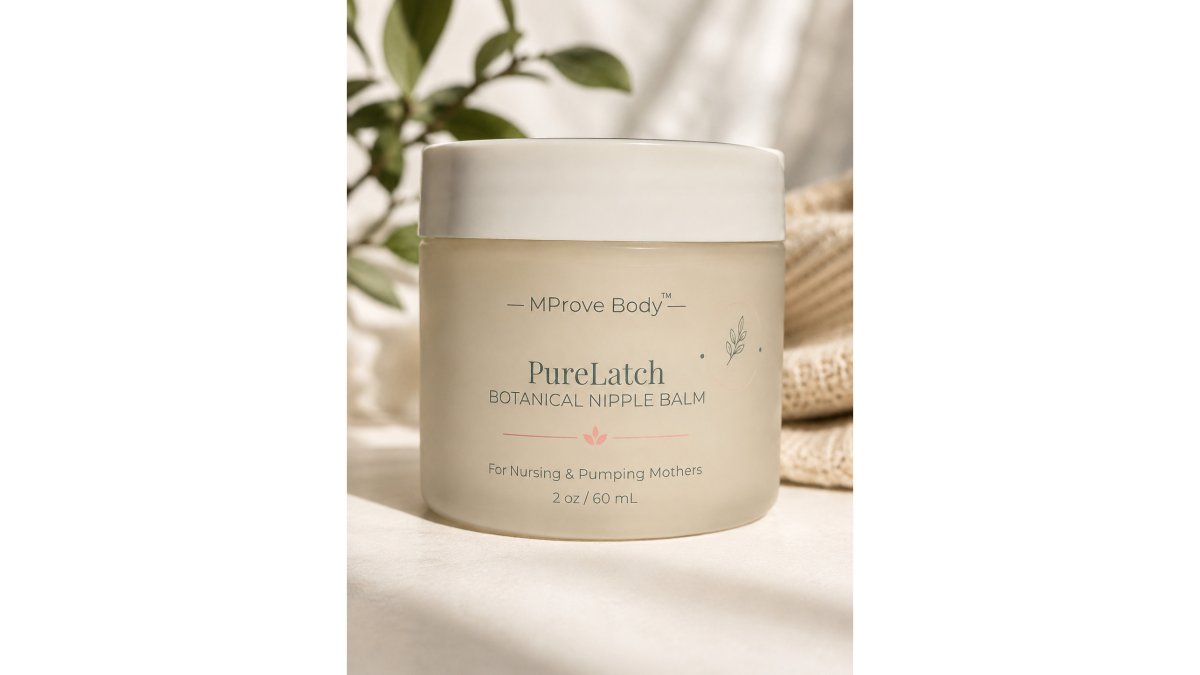
Most nipple cream roundups tell you to "avoid harsh chemicals" and stop there. That is not actionable at 3 a.m. with a crying baby. Here is the breakdown that actually helps you read a label.
Generally safe for nursing (no wipe-off needed):
Use with caution or avoid:
Some creams are labeled "wipe off before feeding." That instruction usually means the formula contains something not intended for ingestion, or a texture that could interfere with latch. No-wipe-off balms are the practical choice for night feeds, when you are not going to wash and dry before every latch.
Before you buy anything, work through our checklist of what to verify in a nipple balm. It takes two minutes and saves a lot of guesswork.
Cracked nipples need two things at once: barrier protection and a break from the friction that caused them. Do not stop feeding abruptly, since that can lead to a blocked milk duct (Lactation following pregnancy or infant loss). Instead, shorten feeds and fix the latch.
PureLatch | Botanical Nipple Balm →
Apply a thin layer of balm after every feed and let it stay on. Express a few drops of breast milk onto the nipple and air dry before adding balm, since breast milk has natural soothing properties.
Watch out: cracked skin that is red, hot, shiny, or spreading can be a sign of thrush or a bacterial infection. For a closer look at which creams actually help damaged skin, read our breakdown of safe nipple cream for breastfeeding.
Temperature is a tool, and most mothers use it backwards. Cold calms swelling and pain. Warm gets milk moving.
Positioning changes which part of the nipple takes the pressure. If you always nurse in the same hold, you always load the same spot.
For pumping, check your flange size. A flange that is too small pulls the nipple against hard plastic and causes chafing. A flange that is too large drags the areola in. Neither is comfortable. Also lower the suction to the highest setting that is still comfortable, not the highest setting the pump allows.
Most breastfeeding pain guides give you a symptom list and leave you to guess. The harder question is triage: which pain is normal adjustment, which is a mechanical problem you can fix at home, and which is a medical red flag that needs a clinician this week, or today.
Different pain patterns point to different causes, and they are frequently conflated:
The psychological toll of painful feeding is legitimate and under-discussed. Dreading feeds, feeling anxious before latch, or noticing low mood tied to nursing are not weakness, they are reasons to ask for help early. Pain that shapes your whole day is worth a conversation even if no physical red flag is present.
Many mothers wait weeks before asking. Do not be one of them, early help is the difference between a fixable mechanical issue and a cracked, infected nipple that sidelines nursing.
Prevention comes down to a short routine you repeat every day. Nothing complicated.
| When | Action | Why It Helps |
|---|---|---|
| After each feed | Air dry, then apply balm | Prevents cracking |
| Twice daily | Check latch and position | Stops friction at the source |
| After pumping | Check flange fit | Avoids chafing |
| Daily | Change nursing pads often | Limits moisture and bacteria |
| When sore | Cold compress for 10-15 min | Calms swelling |
For the full long-term picture, our safe nipple care guide covers routine building in more depth.
It depends on the formula. Many balms are designed to be left on and do not require washing before a feed, but check the label. PureLatch is a plant-based blend of olive oil, coconut oil, shea butter, cocoa butter, sunflower oil, jojoba oil, marshmallow, chamomile, and vitamin E. If you are unsure about any product, ask your lactation consultant or healthcare provider before your next feed.
Expressing a few drops of breast milk onto the nipple and letting it air dry is a long-standing home remedy. It is not a replacement for barrier protection if skin is cracked or raw. Use breast milk application as a gentle first step, then follow with a balm that creates a moisture barrier, especially after pumping or nighttime feeds when skin tends to dry out.
Nipple shields can help with latch problems and flat or inverted nipples, but they are not a first-line fix for every case of soreness. Ask a lactation consultant to fit and assess one before relying on it. If pain continues after a few days with a shield, stop using it and get the latch checked, because ongoing pain is a sign the underlying cause has not been resolved.
If pain does not match a latch pattern, or comes with itching, burning, or colour changes, see a healthcare professional. Treating the wrong cause delays relief and can lead to cracked skin or mastitis.
Nipple pain in the first weeks is common, but it is not something you have to accept. The fix usually starts with latch, then barrier protection, then knowing when to call for help. MProve Body makes that middle step easier with PureLatch, a lanolin-free botanical balm formulated by a board-certified OB/GYN, built from plant-based oils and butters, and designed specifically for pregnancy and postpartum skin. Get started with MProve Body and give tender skin the barrier it needs to heal.


