Your cart is empty
Tax included and shipping calculated at checkout
Drawer menu
Tax included and shipping calculated at checkout

Last Updated: October 26, 2026
Quick Summary
Natural remedies for postpartum hair loss cannot stop hormonal shedding, but scalp massage, diluted rosemary oil, and gentle hair care can support a healthy scalp and reduce breakage while your cycle resets. Most women see shedding taper within a year, and visible regrowth follows the hormonal timeline rather than any product.
Postpartum hair loss is temporary shedding that happens when estrogen drops after birth and follicles shift back into their normal growth cycle. Most women notice it between three and six months after delivery. At MProve Body, we explain it this way: your hair didn't change during pregnancy, your hormones did.
That single fact should shape everything you do next.
Each strand moves through three phases: growth, transition, and rest. During pregnancy, high estrogen keeps more follicles in the growth phase, so hair feels thicker.
After birth, estrogen falls, those extra follicles move into rest together, and weeks later they shed together, which is why the drop feels sudden and alarming.
It's not damage; it's a cycle resetting.
Normal shedding means losing more hair than usual for a few months, spread evenly across the scalp, with more strands in the shower, on your pillow, or in your brush.
Watch for these differences:
Postpartum hair loss duration typically runs three to six months of active shedding, with regrowth over the following six to twelve months. Most women return to normal thickness within a year of giving birth.
The timeline usually looks like this:
Breastfeeding can stretch the timeline: prolactin keeps estrogen lower for longer, so some nursing mothers shed later and longer. That's expected.
"Normal" is a range, not a deadline, some finish in four months, others take fourteen. If you're past a year and still shedding heavily, see your doctor.
Gentle hair care routines for postpartum focus on one goal: keep the hair you have. Shedding is hormonal and you can't switch it off; breakage is mechanical, and you can reduce it.
Start with these habits:
Washing: apply shampoo to the scalp only, let it rinse through the ends. Conditioner goes mid-shaft to tips.
Drying: air-dry when you can; if you blow-dry, use low heat and hold it at least 15 centimetres from your scalp.
Styling: loosen up. Tight ponytails, braids, and buns cause traction damage, a separate problem from shedding that you control completely.
Cut back on heat styling and chemical treatments like perms or highlights until shedding settles, not forever.
Natural remedies for postpartum hair loss fall into two groups: those with reasonable supportive evidence and those that rely on tradition. Neither stops hormonal shedding, but both can support a healthier scalp and stronger-feeling strands while your cycle resets.
Here is how we would grade the most commonly recommended remedies:
| Remedy | Evidence Level | What It Can Help With | Key Limits and Risks |
|---|---|---|---|
| Scalp massage | Moderate | Scalp stimulation, blood flow, relaxation | Small studies; skip if scalp is inflamed or broken |
| Rosemary oil | Moderate | Scalp environment, hair feel | Dilute before use; patch test; avoid eyes; check with provider if breastfeeding |
| Herbal oil blends | Traditional use | Moisture, manageability, breakage | Allergen risk; not standardized; check each ingredient |
| Biotin supplements | Limited for most | Only if genuinely deficient | Can skew lab results; high doses may interact with medications |
| Minoxidil | Strong, but medical | Androgenetic hair loss, not postpartum shedding | Not for use while breastfeeding without medical advice |
Most evidence for scalp massage and rosemary oil comes from small studies, often in people with different types of hair loss and formulations unlike what you can buy, suggestive rather than definitive. If you're weighing whether topical products actually work, read Can Topical Products Stop Postpartum Hair Loss?.
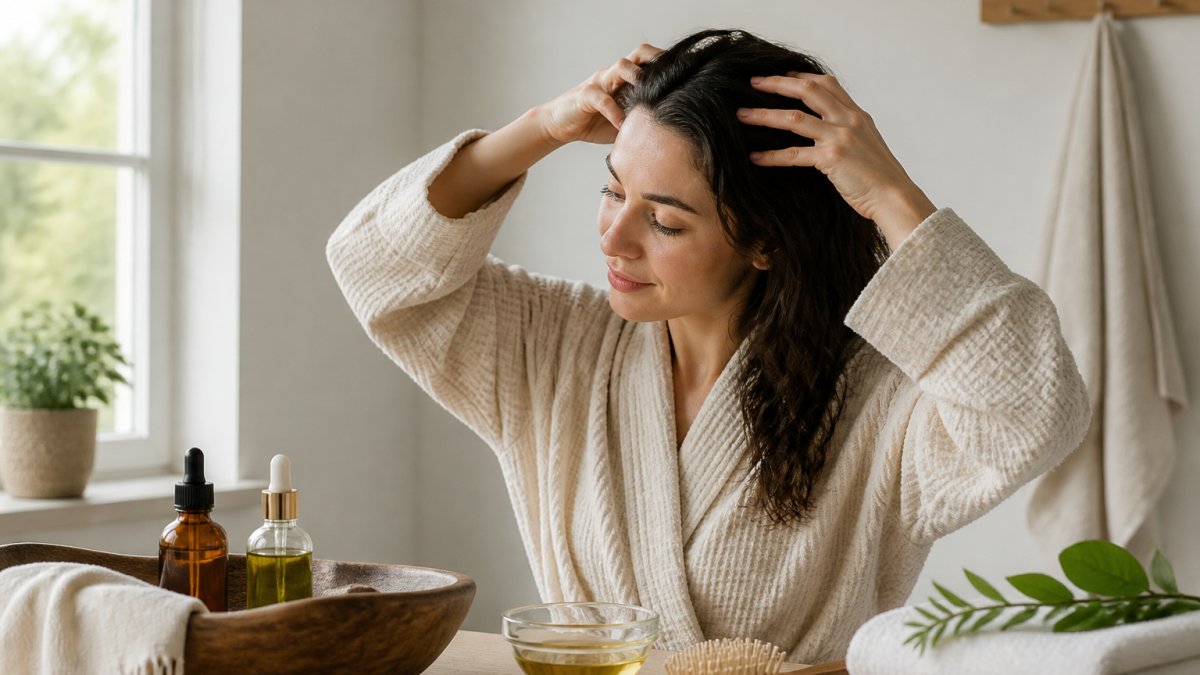
The honest take: no topical product stops postpartum shedding, because shedding is driven by hormones, not by what's on your scalp.
Scalp massage is the cheapest, lowest-risk remedy here. Use your fingertips, not your nails, in small circles for five to ten minutes, two to four times a week.
For oils, apply to the scalp first, massage in, then distribute through the ends. If you'd like a ready-made option, our Hair Growth Oil is formulated for exactly this kind of scalp application.

Our Hair Growth Oil is developed with a carefully selected blend of botanical oils and traditional herbal ingredients, including batana, rosemary, amla, bhringaraj, brahmi, moringa, black seed, fenugreek, jojoba, sweet almond, coconut oil, and vitamin E.
Breastfeeding changes the risk calculation, so be conservative. Anything you apply to your skin or swallow can potentially reach milk, and evidence for many natural products in nursing mothers is thin.
The rule we'd give a friend: if you're nursing and unsure, ask a lactation consultant or your OB/GYN before starting, and bring the product label so the conversation is specific.
Even low-risk remedies have failure modes. The most common:
Set realistic expectations. Natural remedies won't shorten the hormonal timeline, but they can support scalp comfort and reduce breakage. Most people on a consistent gentle routine notice less breakage and a healthier-feeling scalp within a few weeks, though visible regrowth follows the hormonal cycle, not the product.
A simple tracking method: take a photo in the same light on the first of each month and note strands in the shower or on your brush. Patterns show up over months, not days.
The best vitamins for postpartum hair loss are the ones your body actually needs for normal hair growth: iron, vitamin D, zinc, biotin, and protein. Food first, supplements second, testing before either.
Here's where to find them:
A balanced diet does more for your hair than any single supplement. For broader support as your body recovers, see Postpartum Hair Recovery: Best Support for Your Changing Body.
Hair fall after pregnancy usually resolves on its own. Sometimes it signals something else, and those cases need a doctor, not another oil.
Book an appointment if you notice:
Some of these point to thyroid changes, iron deficiency, or other treatable conditions. A dermatologist can also distinguish postpartum shedding from androgenetic hair loss, which needs different treatment.
One more thing worth knowing: if you have a baby or toddler in the house, check their extremities for a hair tourniquet.
You don't need a shelf full of products, just a few habits, a couple of product categories, and a way to track change. Here's a practical, low-cost routine you can start this week.
That's the core. If you're ready to assemble a routine, The Signature Trio | Complete Motherhood Essentials Bundle covers the essentials in one place. The time commitment is under fifteen minutes a week, and the product categories are simple: a gentle shampoo, a conditioner, and one oil you have patch-tested.

You do not need to spend a lot. Look for these categories and read labels:
Skip anything that promises to stop shedding. No product can do that.
Tracking is the part most routines miss. Take a photo in the same light on the first of each month and note strands in the shower or on your brush. Look for short fuzzy strands along the hairline and part, a sign of regrowth.
If you want a comprehensive approach, The Signature Trio | Complete Motherhood Essentials Bundle brings together our Hair Growth Oil, StriaeMend™ Stretch Mark Therapy Cream, and PureLatch™ Botanical Nipple Balm.
Cutting hair does not change how much you shed, because shedding is driven by the hair growth cycle resetting after pregnancy, not by hair length. A shorter cut can make thinning less obvious and reduce the weight pulling on fragile strands, which some mothers find easier to manage. If you want a change, treat it as a styling choice rather than a treatment. The shedding will still run its course, and regrowth will still begin on the same timeline.
Scalp massage supports scalp stimulation and blood flow, and it feels good during a stressful recovery period, but it will not stop the hormonal shedding that follows birth. Use fingertips or a soft brush, work in small circles for a few minutes, and keep pressure light. Pair it with a botanical oil if your scalp feels dry. Stop if you notice tenderness, irritation, or increased pulling on the hair.
Yes. Postpartum shedding commonly begins around two to four months after birth and can continue for several months, so hair fall at five months fits the usual pattern for many mothers. What matters more is the trend. If shedding is steadily slowing and you see fine new hairs along the hairline, you are likely on track. If it is getting heavier, or comes with fatigue, unusual bruising, or scalp itch, ask your doctor to check for other causes.
Seek medical advice if shedding continues heavily beyond about a year, if you notice bald patches or a widening part, or if hair loss comes with symptoms such as exhaustion, dizziness, unusual bruising, or thyroid-related signs. These can point to iron deficiency, thyroid changes, or other conditions that need assessment rather than home remedies. A doctor can run blood tests and rule out causes that a topical treatment or vitamin will not fix.
Postpartum shedding is temporary, but the wait is genuinely hard. You don't have to guess your way through it. Build a gentle routine, give it a year, and get help if the red flags show up. MProve Body makes clinically-informed recovery products so you can care for your changing body with confidence. Explore the Hair Growth Oil and the Signature Trio, and start a routine that supports your scalp through recovery and beyond.


