Your cart is empty
Tax included and shipping calculated at checkout
Drawer menu
Tax included and shipping calculated at checkout

Quick Summary
A postpartum self-care kit is a set of recovery and comfort items kept within easy reach during the first weeks after birth. Build it before your due date with overnight pads, mesh underwear, a peri bottle, and cleansing supplies. Then add breast care, snacks, and water, staged by where you will use them.
Last Updated: November 11, 2026
At MProve Body, we hear the same thing from new mothers: they wish they had gathered their supplies before the baby arrived.
The first weeks after birth are physically demanding. Bleeding, perineal soreness, breast care, and hydration all need attention, often at odd hours.
Here is what a good kit does for you:
Start by building the kit before your due date. You can adjust it later based on how your recovery goes.
Your recovery depends on how you gave birth. Vaginal birth and cesarean birth call for different supplies, so personalize your kit to match.
For vaginal birth, consider:
For C-section recovery, consider:
Some supplies work for both. Mesh or comfortable underwear, pads, and a water bottle help everyone. Check with your care provider about what is right for your recovery, and ask them about any activity limits or warning signs to watch for.
This list covers the supplies most mothers use in the first few weeks.
Needed in the first 48 hours:
Helpful within the first two weeks:
Choosing between options:
How to use the sitz bath safely: Use warm, not hot, water, and sit for about 10 to 15 minutes. Pat dry gently afterward rather than rubbing.
Watch out: Soaking in a full bathtub soon after birth can raise the risk of infection in some cases, so ask your provider whether a basin bath is the right choice for your recovery before using a tub.
When to contact your clinician: Call your provider promptly if bleeding soaks through a pad in an hour or less for more than two consecutive hours, if you pass clots larger than a golf ball, if you have a fever, or if perineal pain, redness, swelling, or foul-smelling discharge gets worse rather than better. Do not rely on cooling products to treat these signs.
Breastfeeding and pumping can leave skin dry and tender. Include supplies that keep you comfortable during feeds and help you rest.
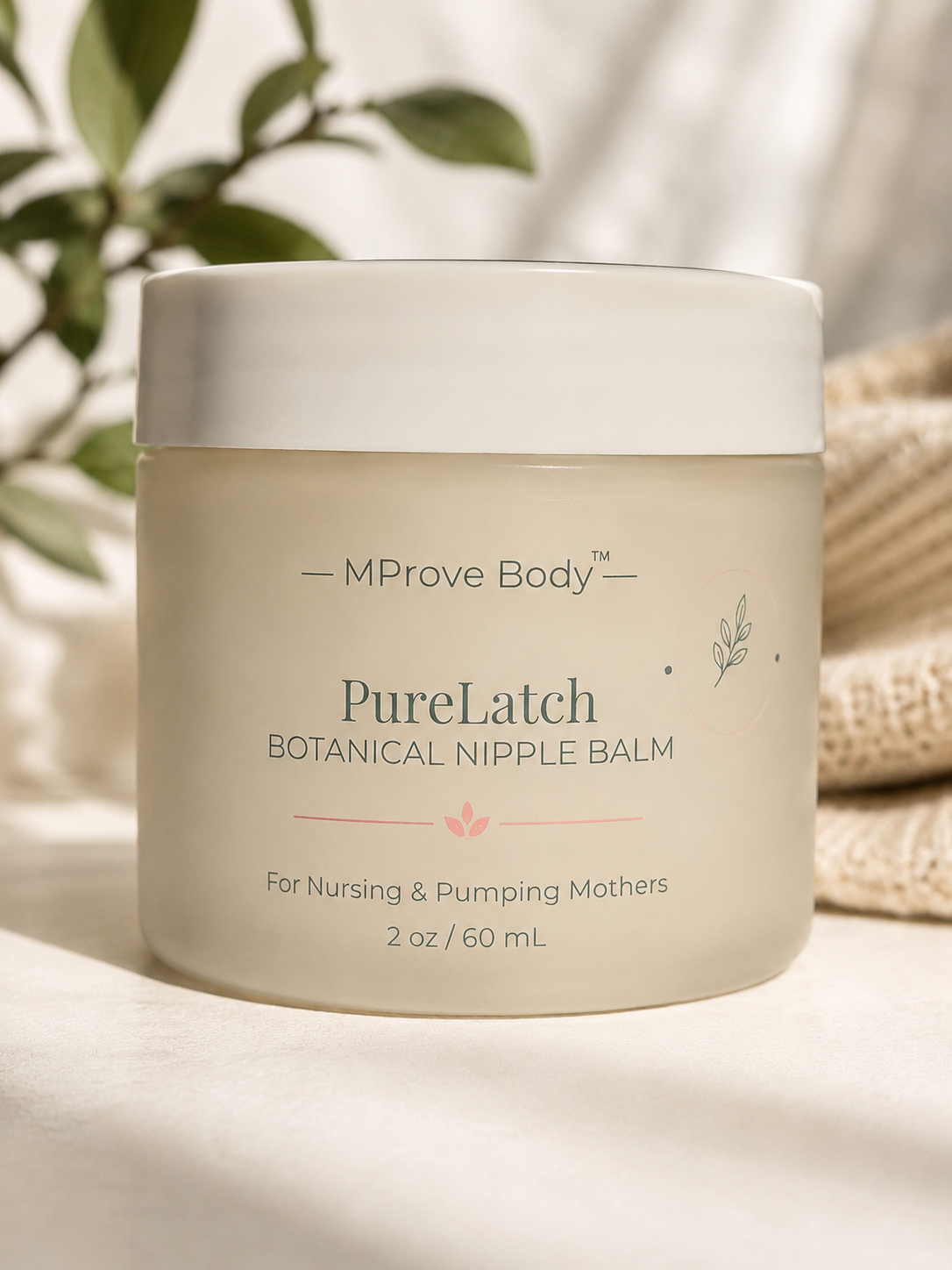
Breast and nipple care:
Before you choose a nipple balm, it helps to know what to look for. 7 Things to Check Before You Choose a Nipple Balm walks through the key criteria.
Hydration and easy snacks:
Rest and comfort:
Keep your water bottle and snacks in the same spot as your feeding chair or bed. You will reach for them more often than you expect.
A kit only helps if it is in the right place when you need it. Most of the trips a new mother makes in the first weeks are short ones: to the bathroom, to the bed, to the nursing chair.
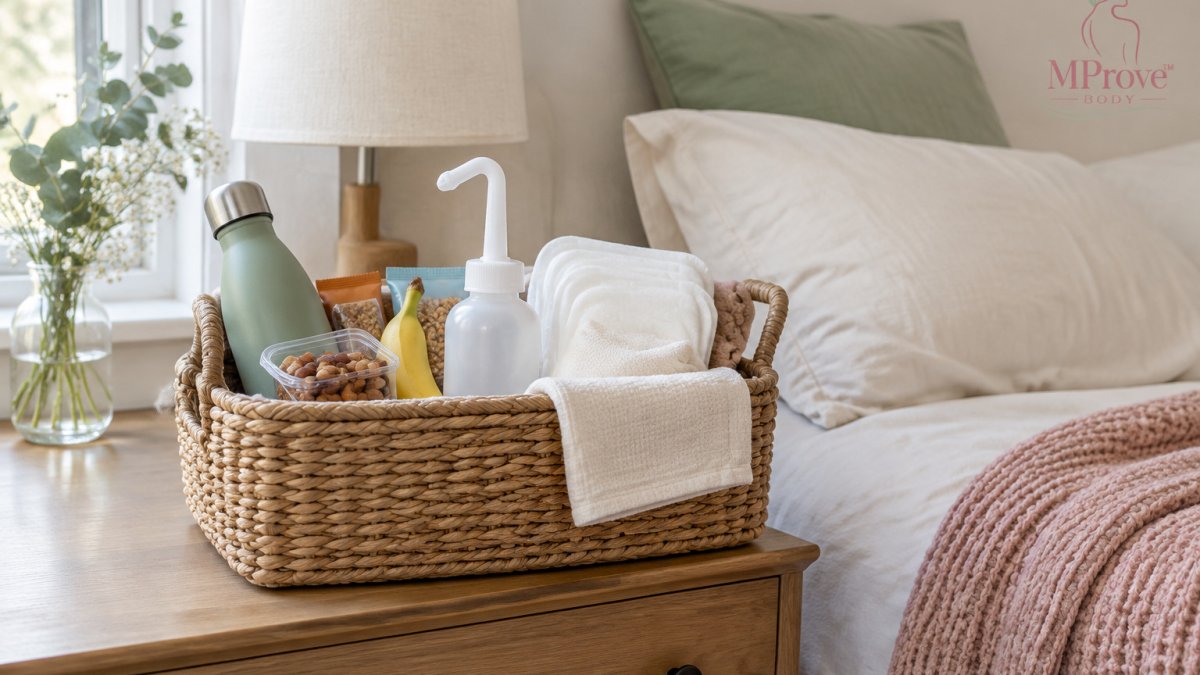
Stage the setup by location:
Set up for limited mobility and one-handed use:
Prepare the space for a partner or helper:
Staged checklist for the first week:
The kit does not need to look perfect. What matters is that you can reach it, see what is low, and hand the job of restocking to someone else when you need rest.
Premade kits are convenient, but building your own lets you choose products that suit your body and budget. You also avoid paying for items you will not use.
Building your own kit:
Reusable versus disposable:
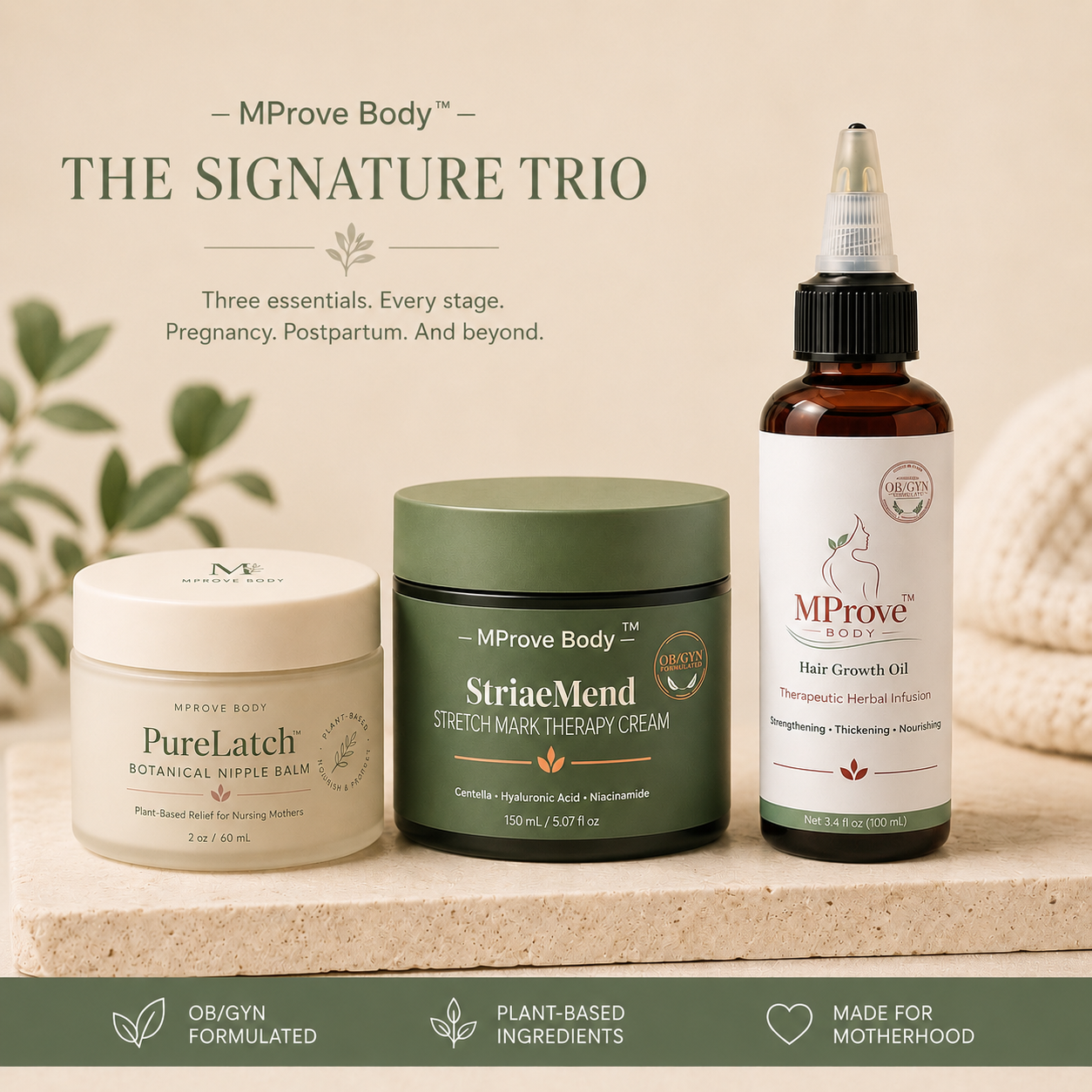
If you want a fuller picture of what a complete set includes, What Should a Complete Motherhood Essentials Bundle Include? explains the typical contents. If you prefer a ready-made option, The Signature Trio | Complete Motherhood Essentials Bundle brings several recovery and comfort products together in one package.
A simple timeline:
Restock as you use things. Keep a running list and check it each week.
Talk with your care provider if you have questions about specific products or recovery concerns.
The timeline below sums up when to set up each part of your kit before the baby arrives.
| When | What to do | Note |
|---|---|---|
| Eight weeks before due date | Make your list and compare options | Start early |
| Four weeks before | Buy core items like pads, underwear and cleansing supplies | Essentials first |
| Two weeks before | Set up bedside and bathroom stations | Keep items in reach |
| Due date | Pack a bag with kit items for the hospital or birth center | Bring it along |
Building a postpartum self-care kit takes a little planning, but it pays off in the first weeks.
Focus on four groups: bleeding supplies such as overnight pads and mesh underwear, perineal comfort items such as a peri bottle and cooling pads, gentle hygiene products, and breast care items like nipple cream and breast pads. Add a refillable water bottle and easy-to-eat snacks, since hydration and nutrition matter during recovery. Tailor the list to whether you had a vaginal birth or a C-section, and to how you plan to feed your baby. Checking your list against what your clinician recommends before delivery helps you avoid gaps.
After a C-section, comfort around the incision and abdomen matters most. Consider loose, high-waisted underwear that will not rub or press on the incision, a pillow to support your abdomen when you cough, sneeze, or stand, and extra pads for lochia (postpartum bleeding). Stock easy-to-reach supplies on one level of the house so you are not climbing stairs for them. Keep a support person in mind for lifting tasks, and contact your care team if pain, redness, or unusual discharge develops at the incision.
Yes. Most of what a kit needs is ordinary household or pharmacy stock that you can gather yourself. Start with a list, sort items by where you will use them (bedside, bathroom, feeding station), and use a basket or caddy for each area. Premade kits can be convenient, but building your own lets you choose reusable or disposable options and match products to your birth type and feeding plan. Buy in stages, prioritizing bleeding and perineal care items first.
Organize the kit by location. Keep a bedside caddy with water, snacks, a phone charger, and pain relief your clinician has approved. Put a bathroom basket with a peri bottle, pads, gentle cleanser, and clean towels near the toilet. Set up a feeding station with nipple cream, breast pads, and a nursing pillow if you plan to breastfeed. Placing items where you will need them reduces effort during the first weeks, when movement is limited and sleep is short.


