Your cart is empty
Tax included and shipping calculated at checkout
Drawer menu
Tax included and shipping calculated at checkout

Last Updated: October 23, 2026
Quick Summary
A pregnancy safe skincare checker is a tool or method that matches a product's ingredients against what is generally considered safe during pregnancy and breastfeeding. Use it to narrow your list of questions before talking to your doctor, not to replace that conversation.
A pregnancy safe skincare checker is a tool or method that helps you match the ingredients in a product against what is generally considered safe during pregnancy and breastfeeding.
That matters because your skin changes fast during pregnancy. Hormones shift oil production, trigger breakouts, and make sun sensitivity worse.
Here is the part most guides get wrong. A checker is not a verdict machine.
Start with the full ingredient list, not the front of the package. Front-of-pack claims like "natural" or "clean" say nothing about safety. The ingredient list, usually on the back or side, is the only part that has to follow labeling rules, and it is the part a pregnancy safe skincare checker actually reads.
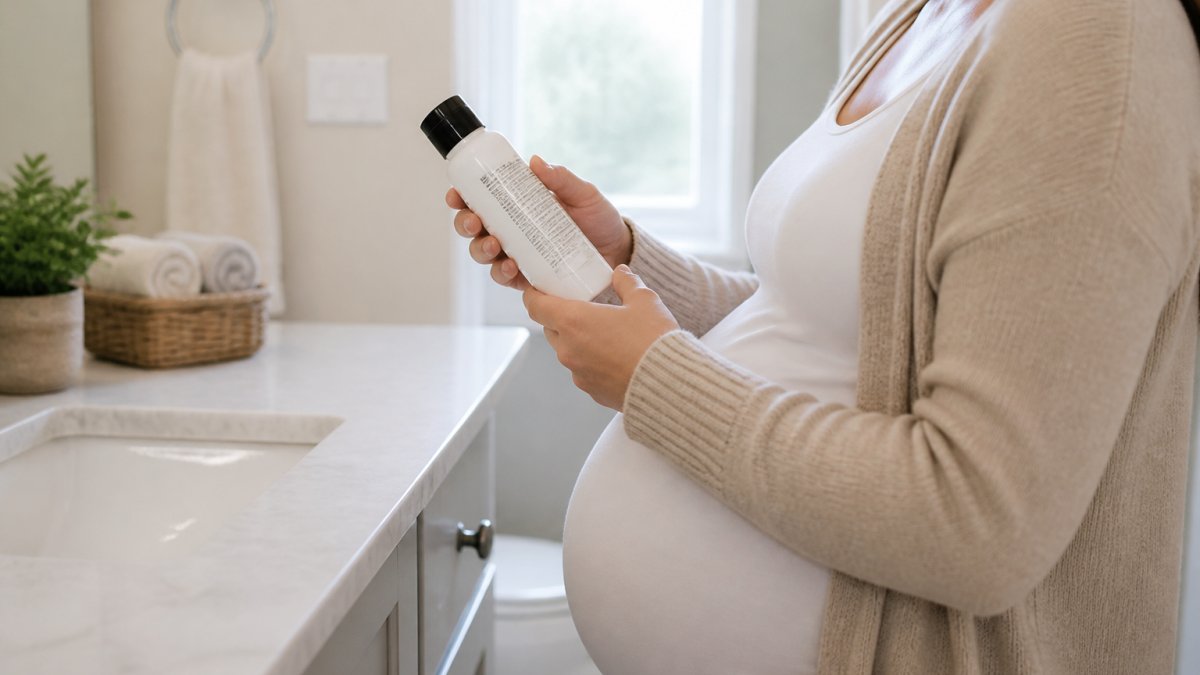
Work through a label in this order:
INCI names are the standardized international terms for cosmetic ingredients, which is why labels say "aqua" instead of water and "tocopherol" instead of vitamin E. The order is not random: ingredients appear from highest to lowest concentration, with anything under roughly one percent allowed in any order at the end.
The harder problem is synonyms. The same ingredient can appear under several names, and a checker that does not recognize one may wrongly clear a product. Common examples:
If a name is not recognized, search the synonym before assuming the ingredient is absent.
A label rarely contains one flag in isolation. When you find several, rank them by exposure rather than by count:
The ingredients most often flagged during pregnancy are retinoids, high-dose salicylic acid, and hydroquinone. These are the ones worth a conversation with your doctor before you keep using them.
Here is a practical breakdown:
| Ingredient | Common Label Names | Why It Gets Flagged | Practical Approach |
|---|---|---|---|
| Retinoids | Retinol, retinyl palmitate, tretinoin | Vitamin A derivatives linked to concerns in high doses | Set aside until after breastfeeding |
| Salicylic acid | BHA, salicylic acid | High concentrations are the concern, not trace amounts | Ask your doctor about strength |
| Hydroquinone | Hydroquinone | Skin-lightening agent with limited pregnancy data | Use a gentler alternative |
| Strong fragrance | Fragrance, parfum | Undisclosed compounds, common irritant | Choose fragrance-free where you can |
| Essential oils | Various plant oils | Irritation risk varies widely by oil | Patch test, use sparingly |
A common mistake is treating every flagged ingredient as equally risky. Concentration, how much skin you cover, and how often you apply all change the picture. A face serum and a full-body lotion are not the same exposure.
A pregnancy skincare ingredient checker app works best as a label scanner and evidence organizer, not an oracle. Most let you scan a barcode or paste an ingredient list, then return a color-coded read on each ingredient. The difference between a useful checker and a misleading one is whether it shows you why an ingredient is flagged and how strong the evidence is.
Use this sequence every time, and the workflow will matter more than the app you pick:
The most useful checkers separate two very different kinds of flags:
StriaeMend | Stretch Mark Therapy Cream →
When a checker does not make this distinction, do it yourself: ask whether the flag reflects a known risk, a theoretical one, or simply a lack of studies. That single question prevents most checker-induced anxiety.
A checker cannot see your medical history, your other medications, your allergies, or how much product you actually use. It also cannot tell you what is safe for your specific pregnancy, that is a clinical judgment. Treat results as dated information: ingredient rules and formulas change, and a database entry from two years ago may no longer match the bottle on the shelf.
A pregnancy safe skincare routine is simpler than most people expect: a gentle cleanser, a moisturizer, and sunscreen in the morning, plus one targeted treatment if you need it. Fewer products means fewer ingredients to check.
Build it in this order:
For stretch marks specifically, look for body products built for pregnancy rather than general-purpose lotions. Our StriaeMend Stretch Mark Therapy Cream uses Centella Asiatica, Hyaluronic Acid, and Niacinamide to deeply hydrate and support skin elasticity while improving the appearance of dry, stretched skin.
If you are breastfeeding, nipple care deserves its own check. PureLatch Botanical Nipple Balm is lanolin-free and made with a nourishing blend of olive oil, coconut oil, shea butter, cocoa butter, sunflower oil, jojoba oil, marshmallow, chamomile, and vitamin E to moisturize, soothe, and protect dry, sensitive skin during the breastfeeding journey.

Checkers cannot see your medical history, your other medications, or how much product you actually use. They also cannot tell you what is safe for your specific pregnancy.
Call your OB/GYN or midwife before using a new product if any of these apply:
Bring the actual bottle or a photo of the ingredient list. Specifics get you a specific answer.
Also treat checker results as dated information. Ingredient rules and product formulas change, and a database entry from two years ago may no longer match the bottle on the shelf.
Reading every label gets tiring, and the stakes feel high when you are pregnant or nursing. A checker narrows the field, but the products you actually put on your skin still have to earn their place.
That is why we build our formulas from the ground up with a board-certified OB/GYN. If you want a simpler starting point, The Signature Trio bundle brings together our stretch mark cream, nipple balm, and hair growth oil for pregnancy, postpartum, and beyond.


Get started with MProve Body and give yourself one less label to second-guess.
No checker can catch everything. Databases rely on published ingredient research, and new or reformulated products may lag behind. A checker flags known concerns like retinoids or high-dose salicylic acid, but it cannot account for your personal medical history, allergies, or how much product you absorb. Treat the checker as a first filter, then confirm anything uncertain with your OB/GYN before adding a product to your routine.
Accuracy varies widely. Apps that cite ingredient-level evidence and update their databases tend to be more reliable than those relying on community votes. Check whether the app shows why an ingredient is flagged and whether it distinguishes topical from oral exposure. Cross-reference any red flag against the product's full label and your clinician's guidance. An app is a starting point, not a final verdict.
Yes, especially for products with active ingredients or anything applied to broken skin. Your OB/GYN knows your pregnancy stage, medical history, and any prescriptions that could interact. Bring the full ingredient list, not just the product name, so they can assess specific actives. For everyday moisturizers and sunscreens, a checker plus a quick confirmation is often enough, but prescription-strength products always warrant a conversation.
Contact the manufacturer directly and ask for the full INCI list. Reputable brands will provide it. If they cannot or will not, treat that as a red flag and choose a product with full disclosure instead. Avoid relying on marketing claims like "natural" or "clean" as safety signals. For pregnancy, transparency matters more than branding, so prioritize companies that publish complete ingredient information.


