Your cart is empty
Tax included and shipping calculated at checkout
Drawer menu
Tax included and shipping calculated at checkout

Last Updated: October 17, 2026
If you're pregnant and breaking out, azelaic acid serum is one of the few acne treatments many dermatologists still reach for. That's because it works on two problems at once: clogged pores and the redness that comes with them. This guide from MProve Body breaks down what the evidence actually supports, so you can decide whether an azelaic acid serum belongs in your routine.
Most acne ingredients force a trade-off during pregnancy. You either get something that works but isn't considered safe, or something gentle that barely does anything. Azelaic acid sits in a rare middle ground. It's a topical treatment derived from a naturally occurring acid, and it's been used for decades for acne and rosacea.
Azelaic acid is a topical treatment that clears pores and calms inflammation at the same time. It slows the growth of acne-causing bacteria on the skin and helps keep dead skin cells from plugging hair follicles.
That dual action matters. Many acne ingredients target bacteria only, which leaves redness and dark spots behind. Azelaic acid also interferes with the enzyme that produces excess pigment, so it can fade the brown marks left by old breakouts.
For pregnancy-related acne, that combination is useful:
Topical azelaic acid is widely considered a pregnancy-compatible option by dermatologists, though no topical treatment comes with a guarantee. The key detail is how little of it reaches your bloodstream when you apply it to your skin.
Systemic absorption of topical azelaic acid is low. When you apply a serum to your face, only a small fraction crosses the skin barrier into circulation. Most of it stays in the outer layers of skin where it does its work.
That low absorption is the main reason healthcare professionals treat it differently from oral acne medications. Oral retinoids carry known fetal risk and are avoided in pregnancy. A topical serum applied to a small area of skin is a different exposure picture entirely.
Here's where most guides get vague, so let's be direct: the clinical evidence for azelaic acid in pregnancy is limited and mostly reassuring rather than conclusive. Large controlled trials in pregnant women don't exist for most topical acne treatments, including this one.
That doesn't mean it's unsafe. It means the data has gaps. A dermatologist or OB/GYN can weigh those gaps against your specific situation, your skin, and how much you're applying. If you're using a prescription-strength product over a large area, that conversation matters more than if you're dabbing a serum on your chin.
Azelaic acid for pregnancy acne tends to help people with mild to moderate breakouts and redness. It's a reasonable first choice if your skin is oily or combination and your main complaints are pimples plus the marks they leave behind.
It's less useful in a few situations:
Hormonal acne during pregnancy often shows up along the jawline and chin. A serum can calm the surface, but it won't change the hormonal driver underneath. Set expectations accordingly.
Several pregnancy-safe acne treatments exist, and each has trade-offs. The table below compares the most common options so you can see where azelaic acid fits.
| Treatment | Main Strength | Main Drawback | Best For |
|---|---|---|---|
| Azelaic acid | Acne plus redness and dark spots | Can tingle or itch at first | Mild to moderate breakouts with marks |
| Benzoyl peroxide | Kills acne bacteria fast | Can bleach fabric, drying | Inflammatory pimples |
| Vitamin C | Brightens and protects | Weak on active acne | Fading dark spots |
| Kojic acid | Targets pigmentation | Limited acne benefit | Melasma and uneven tone |
Benzoyl peroxide is a long-standing option for inflammatory acne, though it can be drying. Vitamin C and kojic acid are better suited to skin brightening than to clearing active breakouts. For melasma and pregnancy-related pigmentation, azelaic acid often gets recommended because it addresses both pigment and breakouts.
A short list of skincare ingredients to avoid during pregnancy matters as much as the one you choose. Retinoids top the list. Oral and topical retinoids are linked to fetal risk and are generally avoided.
Other ingredients many clinicians suggest skipping:
Sun protection is non-negotiable. Pregnancy can make skin more prone to pigmentation, and UV exposure makes melasma worse. A mineral sunscreen plus a hat does more for dark spots than most serums.
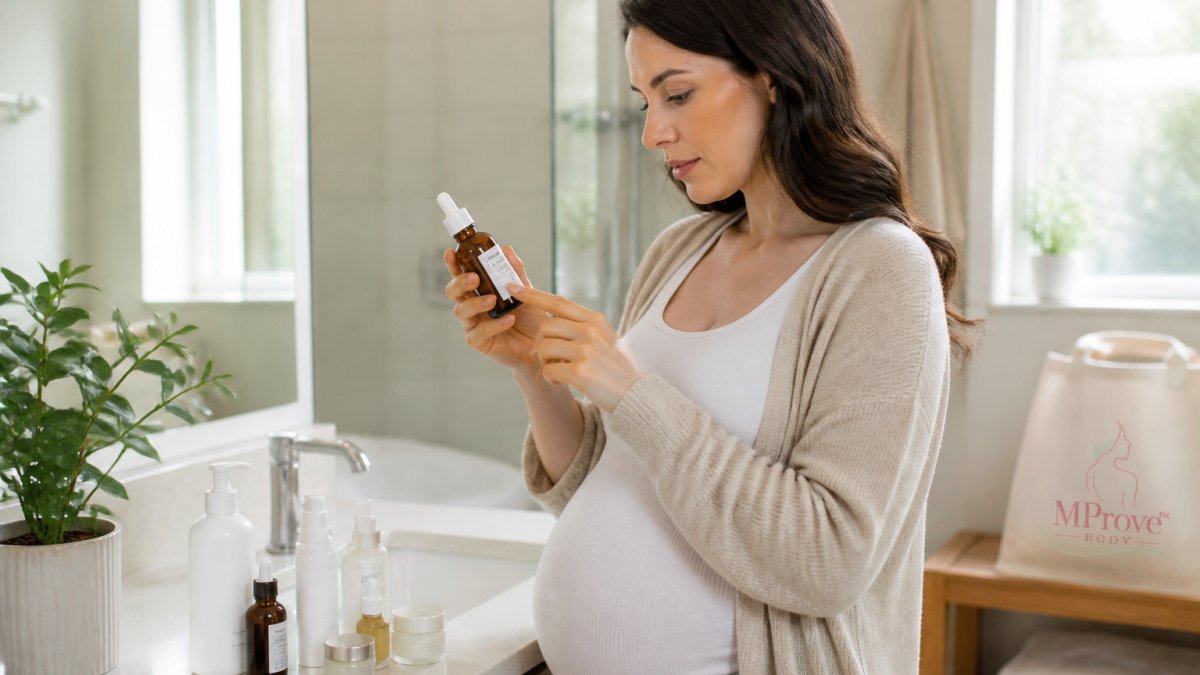
The label tells you more than the marketing does. For a serum, three things decide whether it is worth buying: the azelaic acid concentration, the delivery format, and everything else in the bottle. Most competitors stop at "check the ingredients." Here is what to actually look for.
Azelaic acid products cluster around a few well-known strengths. Cosmetic serums typically sit in the lower range, while prescription gels and creams are formulated at higher, fixed strengths. The practical trade-off is simple: lower concentrations tend to be gentler and better tolerated, higher concentrations may work faster but are more likely to sting, itch, or dry the skin.
For pregnancy, the concentration question is less about safety and more about tolerance. A lower-strength serum you can actually use every day usually beats a high-strength product you have to stop after three days because your skin is angry.
Format changes how the product feels and how well it suits your skin, not whether it is "more effective" in the abstract.
If your main goal is fading dark spots and calming redness on normal-to-oily skin, a serum is a reasonable format. If your skin is dry or already irritated, a cream may serve you better even if it is not labeled "serum."
The azelaic acid percentage is only part of the story. Scan the rest of the list for:
A short, clear ingredient list is usually easier to evaluate than a long one full of botanicals and "proprietary blends."
This is the distinction most guides skip. A cosmetic serum you buy off the shelf is not the same product as a prescription azelaic acid gel or cream. Prescription formulas are standardized at specific strengths, are often paired with other actives, and are intended for diagnosed conditions like acne or rosacea. If you are using a prescription product, the absorption and monitoring conversation with your doctor is different from dabbing a cosmetic serum on your chin.
Most guides describe azelaic acid as "pregnancy-safe" and leave it there. That framing hides the part you actually need: how to use it without irritating your skin, how long to wait before judging results, and when to stop. This section covers the practical guidance competitors tend to skip.
Start slower than you think you need to. A common approach is:
Azelaic acid plays well with most pregnancy-compatible routines, but order matters:
If you also use vitamin C, a common pattern is vitamin C in the morning and azelaic acid at night, which limits the chance of stacking irritation. Avoid layering azelaic acid directly with strong exfoliating acids or retinoids.
Set expectations by concern, because they do not move at the same speed:
If you see no change at all after about three months of consistent, tolerated use, the serum may not be the right fit for your skin, and it is worth revisiting with a dermatologist.
Mild tingling, itching, or dryness in the first days is common and usually settles as your skin adjusts. These are nuisance effects, not danger signs.
Stop using the product and contact your doctor if you experience:
Pregnancy-safe does not mean irritation-free. If your skin is reactive, sensitive, or already compromised by another product, azelaic acid may not be tolerable for you even though it is considered safe.
Azelaic acid is not for everyone. You may want to skip it or proceed with caution if you have rosacea that flares with any active, a history of contact dermatitis, or skin that has reacted badly to acidic ingredients before. In those cases, a gentler brightening option or a prescription alternative discussed with your doctor may be a better path.
Topical azelaic acid is widely considered a pregnancy-compatible option by dermatologists and OB/GYNs because very little of it is absorbed into the bloodstream when applied to the skin. It is classified as pregnancy category B, meaning animal studies have not shown fetal risk. That said, no large human trials exist specifically for topical azelaic acid in pregnancy. Most clinicians still recommend checking with your OB/GYN or dermatologist before starting any new active ingredient, especially in the first trimester.
Azelaic acid addresses two concerns that often appear together during pregnancy: inflammatory acne and post-inflammatory hyperpigmentation. It reduces acne-causing bacteria and calms redness, which makes it useful for hormonal breakouts. It also inhibits tyrosinase, the enzyme involved in excess melanin production, so it can gradually fade dark spots and melasma over several weeks of consistent use. Results are gradual rather than immediate, and pairing it with daily sun protection improves outcomes for pigmentation.
The main ingredients to avoid in serums during pregnancy are retinoids (retinol, tretinoin, adapalene), high-dose salicylic acid in oral form, and hydroquinone. Retinoids carry a known risk of birth defects and are typically discontinued before conception or as soon as pregnancy is confirmed. Hydroquinone has limited safety data for pregnancy. Kojic acid and vitamin C are generally considered acceptable alternatives for brightening. Always verify the full ingredient list, since some multi-ingredient serums combine actives.
Yes. Even though topical azelaic acid is considered low-risk, your OB/GYN or dermatologist can account for your specific history, other products you use, and any prescription treatments you are on. They can also confirm whether the concentration and formulation you plan to use fits your skin type. If you have sensitive skin or a history of reactions to skincare products, a professional review is especially worthwhile before adding a new active.
Pregnancy skin changes fast, and finding products you can trust shouldn't add stress. MProve Body was built for exactly this stage, with products formulated by a board-certified OB/GYN and developed from the ground up rather than picked from a catalog. Our range supports the changing body through pregnancy and postpartum, from stretch marks to nipple care. Add to cart and start with a routine designed for this chapter.


