Your cart is empty
Tax included and shipping calculated at checkout
Drawer menu
Tax included and shipping calculated at checkout

Last Updated: October 30, 2026
Quick Summary
Build a postpartum care kit before delivery, because recovery takes weeks and the items you need most are rarely the ones you remember to buy. Focus your motherhood essentials on bottom care, comfort, feeding, and skin and hair, then add C-section or nursing supplies as your delivery and feeding choices require.
Building a postpartum care kit before delivery is the single most practical step an expectant mother can take, and it is where every list of must have motherhood essentials for postpartum should begin. Many new mothers describe the same story: the hospital bag is packed, the nursery is ready, and then the first week at home arrives with nothing on hand for the mother's own body.
That gap matters. Recovery takes weeks, not days, and the items you need most are rarely the ones you remember to buy.
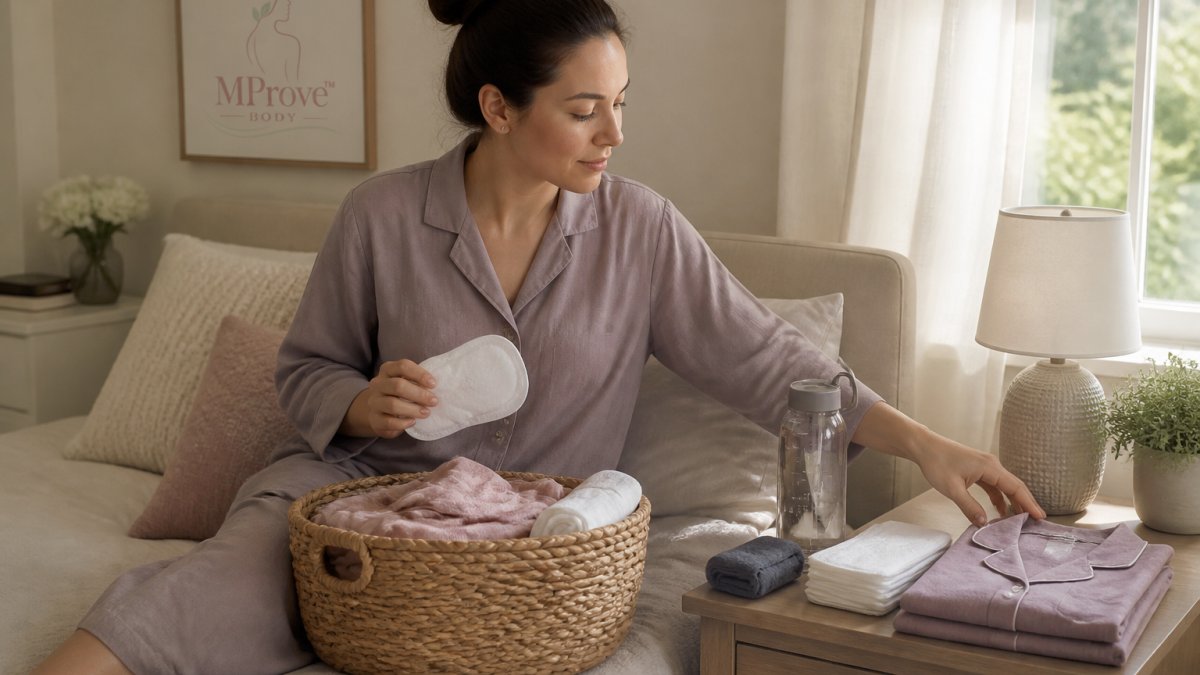
Think in categories rather than products, because brands differ and your body will tell you what it needs.
The complete motherhood essentials bundle covers the skin, nipple, and hair side of that list in one purchase.

Perineal care is the center of postpartum essentials after vaginal birth, and the routine is simpler than the product aisle suggests. Cleansing, cooling, and drying are the three jobs. Everything else is a variation on those.
A peri bottle is a squeeze bottle used to rinse the perineum with warm water after using the toilet, replacing wiping while tissue is tender.
Check with your provider before applying anything to stitches.
C-section recovery essentials look different from vaginal birth supplies, and packing only for one type of delivery is a common mistake. The incision changes what you can wear, lift, and reach for.
High-waisted postpartum underwear that sits above the scar beats anything that rubs. Loose clothing helps. A small pillow is genuinely useful for bracing your incision when you cough, laugh, or stand.
Keep the area clean and dry, follow your discharge instructions exactly, and watch for signs of infection (the NHS). Pain relief and constipation support matter here too, since straining puts pressure on the incision.
Best for: planned or unplanned cesarean births where waistbands and reaching are the main friction points. Skip if: you had an uncomplicated vaginal birth, in which case the perineal kit above is the priority.
Postpartum nursing essentials come down to protecting tender skin and staying hydrated. Nipple pain in the early days is common, and it is usually about latch and moisture rather than a product gap.
A lanolin-free botanical balm such as PureLatch is formulated with olive oil, coconut oil, shea butter, cocoa butter, jojoba oil, marshmallow, chamomile, and vitamin E to moisturize and soften dry, sensitive skin. It is OB/GYN formulated and designed for pregnancy and postpartum care.

Feeding choices vary, and a bottle-feeding mother needs bottles, formula, and burp cloths instead. Neither path is the "right" one.
If soreness persists or latch keeps hurting, a lactation consultant is the practical next call. For deeper guidance, our safe nipple care while breastfeeding guide covers what to apply and what to avoid.
Skin and hair changes are the motherhood essentials nobody packs, yet they are among the most visible parts of recovery. For postpartum hair recovery support as your body changes, the scalp care steps below are a good place to start. Stretched skin feels tight and dry. Hair shedding arrives weeks after birth and startles almost everyone.
PureLatch | Botanical Nipple Balm →
Postpartum hair shedding is a temporary increase in hair loss that follows the hormone shift after delivery. Hair Growth Oil is a scalp care product that helps nourish the scalp and reduce the appearance of dryness and brittleness.
Our Hair Growth Oil blends batana oil, rosemary, amla, bhringaraj, brahmi, moringa, black seed, fenugreek, jojoba, sweet almond, coconut oil, and vitamin E. Apply directly to the scalp and massage gently, 2-4 times weekly.
For stretched skin, a lightweight cream-serum is an option that glides easily over larger areas without a heavy or greasy residue.
Most postpartum shopping lists are too long, and the honest split is smaller than the market suggests. The essentials are the items that solve a daily physical problem in the first two weeks.
| Category | Truly Essential | Nice to Have | Can Skip |
|---|---|---|---|
| Bottom care | Peri bottle, pads, witch hazel | Sitz bath salts | Fancy cleansing sprays |
| Comfort | Loose pajamas, heating pad | Meal delivery | Specialized recovery gowns |
| Feeding | Balm, burp cloths, water bottle | Nursing pillow | Single-use nipple shields |
| Skin and hair | One stretch mark cream, one scalp oil | Body oil | Multi-step routines |
| Baby gear | Car seat, bassinet, diapers | Stroller | Extras bought before week two |
Budget tiers help too. A lean kit covers bottom care, comfort, and feeding. A mid-tier kit adds skin and hair care.
You can buy many of these items after the baby arrives, but bottom care items and a car seat are worth having ready beforehand.
Knowing when to call your provider is part of the kit, not an afterthought. Contact your care team for a fever, worsening pain, foul-smelling discharge, incision redness or separation, heavy bleeding that soaks a pad quickly, or calf pain and swelling.
Mental health belongs on the same list. Persistent sadness, intrusive thoughts, or feeling unable to care for yourself or your baby deserve a call, not a wait-and-see. Postpartum mood changes are common and treatable, and reaching out early makes the road shorter.
The official guidance on postpartum warning signs from obstetric professionals is worth reading before you need it, and mental health support resources exist specifically for new parents.
Practical preparation helps here too. Tell one person what to watch for in you, and give them permission to say something.
Recovery is not a test of how much you bought. It is a stretch of weeks where your body does hard work, and the goal is to make ordinary moments a little easier.
MProve Body was built around that idea, with products formulated by a board-certified OB/GYN using a background in chemistry, developed from the ground up rather than picked from a manufacturer's catalog. The Signature Trio brings StriaeMend Stretch Mark Therapy Cream, PureLatch Botanical Nipple Balm, and our Hair Growth Oil together at $74.99. Individual products start at $16.99.
Get started with MProve Body and put the essentials in place before the first week arrives.
Aim to have it ready by 34 to 36 weeks. Most of what you need is inexpensive and easy to gather in one or two shopping trips, and packing early means you are not asking a partner to hunt for a peri bottle at midnight. Store the kit in the bathroom you will use most, plus a smaller basket next to wherever you plan to feed and rest. Restock pads and snacks before you are down to the last few.
Yes. A C-section recovery essentials set leans on high-waisted underwear that clears the incision, loose clothing that does not rub, a small pillow to brace against when you cough or laugh, and gentle cleansing rather than scrubbing. You may still bleed for several weeks, so keep postpartum pads on hand. Skip anything tight around the waistband and ask your provider how to care for the incision before you buy scar products.
Check the label and ask your provider or a lactation consultant, since recommendations vary by product. PureLatch Botanical Nipple Balm is lanolin-free and made with plant-based oils and butters including olive oil, shea butter, cocoa butter, marshmallow, and chamomile, and it is designed for pregnancy and postpartum care. Apply a small amount to the nipple and areola after nursing or pumping. If soreness persists beyond a few days or you notice cracking, talk to a lactation consultant about latch.
Bleeding should steadily lighten over the first weeks, and pain should ease rather than build. Contact your provider promptly if you soak through a pad in an hour, pass clots larger than a golf ball, run a fever, notice a foul smell, or have pain that gets worse instead of better. The same goes for incision redness, separation, or discharge after a C-section. Trust your instinct here: calling and being told it is fine is always better than waiting.


