Your cart is empty
Tax included and shipping calculated at checkout
Drawer menu
Tax included and shipping calculated at checkout

Last Updated: October 25, 2026
Quick Summary
Treat melasma during pregnancy with daily broad-spectrum mineral sunscreen, azelaic acid, vitamin C, and niacinamide, while avoiding hydroquinone, retinoids, and strong chemical peels until after delivery. Sun protection is the single most important step, since UV light makes patches darker.
Melasma during pregnancy is a common form of skin discoloration that shows up as brown or gray-brown patches, usually on the cheeks, forehead, upper lip, and chin. It is often called chloasma or the mask of pregnancy, and it is harmless. At MProve Body, we hear from many expectant mothers who are surprised by how quickly these patches appear.
The patches are usually flat and symmetrical, which separates melasma from most rashes and irritation. Some women notice smaller freckle-like spots instead of large patches. The key point: melasma is a pigment issue, not a skin infection or an allergic reaction.
Pregnancy hormones drive the whole process. Rising estrogen and progesterone stimulate melanocytes, the cells that make melanin (pubmed.ncbi.nlm.nih.gov). More melanin means more pigment, and that pigment tends to collect in sun-exposed areas of the face.
This is why melasma often appears in the first trimester, when hormone levels climb fast. It is also why sun exposure makes it worse: ultraviolet light tells those already-sensitive melanocytes to produce even more pigment.
A common mistake is assuming the patches will fade on their own within weeks. Some do, but many linger through pregnancy and need steady sun protection to stop them darkening.
The safest approach during pregnancy is sun protection plus a small number of evidence-backed topicals. Skip aggressive treatments and focus on ingredients with a reasonable safety record in pregnancy.
What works, in plain terms:
What to hold off on: hydroquinone, retinoids, and most chemical peels. These are usually reserved for after pregnancy and breastfeeding, and only under a doctor's guidance. The American Academy of Dermatology's guidance on melasma is a useful plain-language reference for how melasma is managed in general.
Azelaic acid is the workhorse here. It is available in gentle concentrations, and it targets excess pigment without the risks linked to hydroquinone or retinoids. Start with a low strength and apply it to clean, dry skin at night.
Vitamin C is a good partner ingredient. It is an antioxidant, so it helps defend skin against daily sun stress. Layer it in the morning under sunscreen.
If you are weighing whether an azelaic acid serum fits your routine, our guide on whether azelaic acid serum is worth it for pregnancy breaks down what to look for.
Watch out: combining several strong actives at once is the fastest way to trigger irritation, and irritated skin often looks darker. Introduce one new product at a time and give it a couple of weeks.
Sunscreen is the single most important step for melasma during pregnancy. Without it, every other product is working against a losing battle.
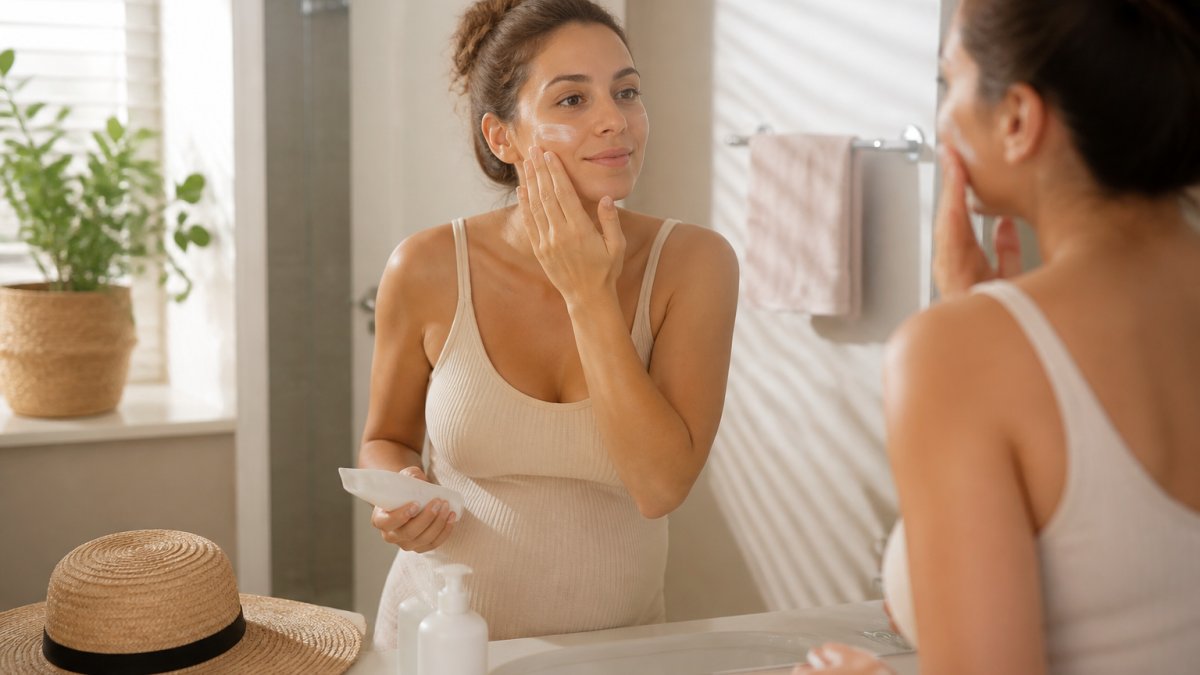
How to apply it well:
Mineral formulas tend to suit sensitive, pregnancy-reactive skin. If you want specific product picks, our roundup of pregnancy-safe mineral sunscreens for the face covers options worth considering.
Some ingredients are best left on the shelf until after pregnancy and breastfeeding. The main ones are hydroquinone, retinoids such as retinol and tretinoin, and high-strength chemical peels or resurfacing acids. Rather than a vague list, here is what each one does, why clinicians pause on it in pregnancy, and what that means for your routine.
Hydroquinone. This is one of the most effective pigment-lightening agents available, which is exactly why it comes up in melasma conversations. It works by interfering with melanin production. The concern in pregnancy is that systemic absorption and safety have not been well established, so most clinicians advise deferring it until after delivery and breastfeeding.
Retinoids (retinol, tretinoin, adapalene, and prescription forms). Retinoids speed up cell turnover and can help fade pigment, but they are consistently flagged in pregnancy because of the known risks associated with systemic retinoid exposure. Topical absorption is much lower, but the precaution remains standard.
High-strength chemical peels and resurfacing acids. Peels can improve melasma by removing pigmented surface layers, but aggressive peels can also irritate skin, and irritation itself can trigger more pigment in melasma-prone skin. Strong peels are generally reserved for after pregnancy under professional guidance. Gentle exfoliation is a different conversation; ask your clinician before adding any acid-based product.
What about exfoliating acids like glycolic and salicylic acid? These are common in pregnancy skincare and are often tolerated in low concentrations, but the evidence is not uniform across strengths and formats. The practical rule is to confirm with your clinician rather than assume a product is fine because it is sold over the counter.
For a fuller, verified list of what to steer clear of, read our guide on what skincare to avoid during pregnancy.
Melasma often fades after childbirth as hormone levels settle, but "often" is not "always." Some women see patches lighten within a few months. Others find the pigmentation lingers, especially if they spent pregnancy in strong sun without protection.
A realistic timeline looks like this:
| Stage | What to Expect | What Helps |
|---|---|---|
| During pregnancy | Patches may darken with sun | Daily sunscreen, gentle topicals |
| First months postpartum | Gradual lightening for many | Keep protecting skin from sun |
| Beyond that | Some patches persist | Dermatologist review if unchanged |
The honest answer: melasma can fade, but there is no guaranteed timeline. Consistent sun protection is the one factor you control that clearly helps.
You do not need a ten-step routine. A short, steady one beats a complicated plan you cannot keep up with.
Keep it boring and consistent. Before adding any new product, verify it is pregnancy-safe using our pregnancy-safe skincare checker.
Most melasma is harmless and manageable at home, but not every dark patch is melasma. The gap most guides leave is telling you when a spot deserves a closer look rather than another round of sunscreen. Use the following as a practical filter.
See a clinician promptly if a patch:
These features do not mean something is seriously wrong, but they are reasons to have a professional confirm the diagnosis instead of assuming pregnancy hormones explain it. Melasma is typically flat, symmetrical, and concentrated on the cheeks, forehead, upper lip, and chin; a spot that breaks that pattern is worth a second opinion.
Also check in if:
A dermatologist or your healthcare provider can confirm the diagnosis and advise on what is safe during pregnancy versus what should wait until after. If you are preparing for that appointment, bring a list of the products you currently use and note when the patches first appeared and how they have changed.
Formulation matters when you are pregnant. Products built for pregnancy and postpartum needs, with input from a board-certified OB/GYN, take the guesswork out of ingredient selection.
That is the idea behind MProve Body. Every product is developed from the ground up by a board-certified OB/GYN with a background in chemistry, rather than picked from a catalog. The focus is on pregnancy and postpartum recovery, from stretch mark support to nipple care for breastfeeding mothers.
If you are deciding whether this kind of product is right for you, our guide on whether OB/GYN-formulated skincare is worth it walks through what to look for.
Melasma can appear at any point, but it most often develops in the second or third trimester when estrogen and progesterone levels are highest. Some women notice faint patches in the first trimester. Sun exposure increases the risk regardless of stage. If you see new brown or blue-gray patches on your cheeks, forehead, or upper lip, start sun protection immediately and mention it to your healthcare provider at your next visit.
Yes, topical vitamin C is generally considered pregnancy-safe and can help fade dark patches by interfering with pigment production. Look for a stable formulation such as ascorbic acid or sodium ascorbyl phosphate. Introduce it slowly to check for irritation, and always follow with broad-spectrum sunscreen, because vitamin C alone will not prevent melasma from darkening in the sun. Ask your OB/GYN or dermatologist before adding any new active to your routine.
For many women, melasma fades gradually in the months after childbirth as hormone levels return to baseline. However, it can persist, especially without consistent sun protection. Breastfeeding and hormonal contraception may slow improvement. A realistic timeline is six to twelve months for noticeable lightening, with some patches requiring postpartum treatment such as azelaic acid or chemical peels. If patches remain unchanged a year after delivery, see a dermatologist for a tailored plan.
Check with your OB/GYN or a dermatologist before using any new active ingredient. Generally, avoid hydroquinone, retinoids, and high-concentration salicylic acid. Ingredients like azelaic acid, vitamin C, and glycolic acid are often considered acceptable in pregnancy, but evidence is limited for some. Choose products formulated specifically for pregnancy, such as those from MProve Body, which are developed by a board-certified OB/GYN. Always patch-test and stop if irritation occurs.
Melasma during pregnancy is manageable, but it asks for patience and consistency. Sun protection, a few gentle actives, and a routine you can actually keep up with do most of the work. MProve Body was built for exactly this stage, with OB/GYN-formulated products designed for pregnancy and postpartum recovery, developed from the ground up, and made with clinically-informed ingredient choices. Get started with MProve Body and give your skin steady, thoughtful care through pregnancy and beyond.


