Your cart is empty
Tax included and shipping calculated at checkout
Drawer menu
Tax included and shipping calculated at checkout

Last Updated: November 19, 2026
Quick Summary
A natural nipple balm is a plant-based ointment that moisturizes, soothes, and protects tender nipple and areola skin during breastfeeding, and it earns a permanent place in a nursing kit because early nursing puts that skin under daily strain. Skin that stays dry, cracked, or irritated between feeds makes every latch hurt more, and painful nursing is a leading contributor to early weaning.
A natural nipple balm is a plant-based ointment that moisturizes, soothes, and protects tender nipple and areola skin during breastfeeding, and it earns a permanent place in a nursing kit because early nursing puts that skin under daily strain. MProve Body formulates its products with a board-certified OB/GYN, and nipple care is a common concern for new mothers.
Here is the part most guides skip: the problem is rarely the latch alone. Skin that stays dry, cracked, or irritated between feeds makes every latch hurt more, and pain is one of the most common reasons mothers stop nursing earlier than they planned. According to the CDC's breastfeeding guidance, painful nursing is a leading contributor to early weaning, which is why a small tin of balm does more work than it looks like it does.
Below, we walk through ingredient safety, what to check before applying anything, and how to build a kit that actually gets used at 3 a.m.
The safety question during pregnancy is less about the product category and more about the individual ingredient list. PureLatch is made with olive oil, coconut oil, shea butter, cocoa butter, sunflower oil, jojoba oil, marshmallow, chamomile, and vitamin E, which help moisturize and soften delicate skin.
What should you actually check? Three things:
A common mistake is buying a balm marketed for pregnancy stretch marks and using it on nipples. Different skin, different job. If you want a broader overview of what to keep in mind while nursing, our guide to safe nipple care while breastfeeding covers the daily routine in more depth.
Reading the label matters before using any nipple balm while breastfeeding.
The practical rule we give mothers: if you would not be comfortable with a trace of an ingredient reaching your baby's mouth, do not put it on your nipple. That single test filters out most questionable products faster than any marketing claim will.
Two habits make application safer and more comfortable:
Watch out: some mothers layer a balm over broken, bleeding skin and keep nursing through severe pain. Cracked skin that bleeds or does not improve deserves a call to a lactation consultant or your clinician (the NHS).
Some mothers prefer a lanolin-free nipple balm, for example if they have a sensitivity to lanolin or prefer a fully plant-based routine.
PureLatch uses olive oil, coconut oil, shea butter, cocoa butter, sunflower oil, jojoba oil, marshmallow, chamomile, and vitamin E, and it is lanolin-free.
Is the switch worth it? For mothers with a known sensitivity, it may be worth making the switch. For everyone else, it comes down to preference and how your skin responds. Our honest take: if lanolin has worked comfortably for you, there is no urgent reason to change. If it has left your skin itchy or you want a botanical routine from the start, a plant-based balm is the simpler choice. We go deeper on this trade-off in our breakdown of whether non-toxic nipple cream is worth it.
Choosing a nipple cream for breastfeeding comes down to a few checks you can run from the label. Run any balm through this list before you buy:
One more: buy a size you will actually finish. A small tin used regularly is easier to finish than a large tub used occasionally.
If you want the checklist in full before you commit, our pre-purchase checklist for nipple balms walks through each item with what to look for on the label.
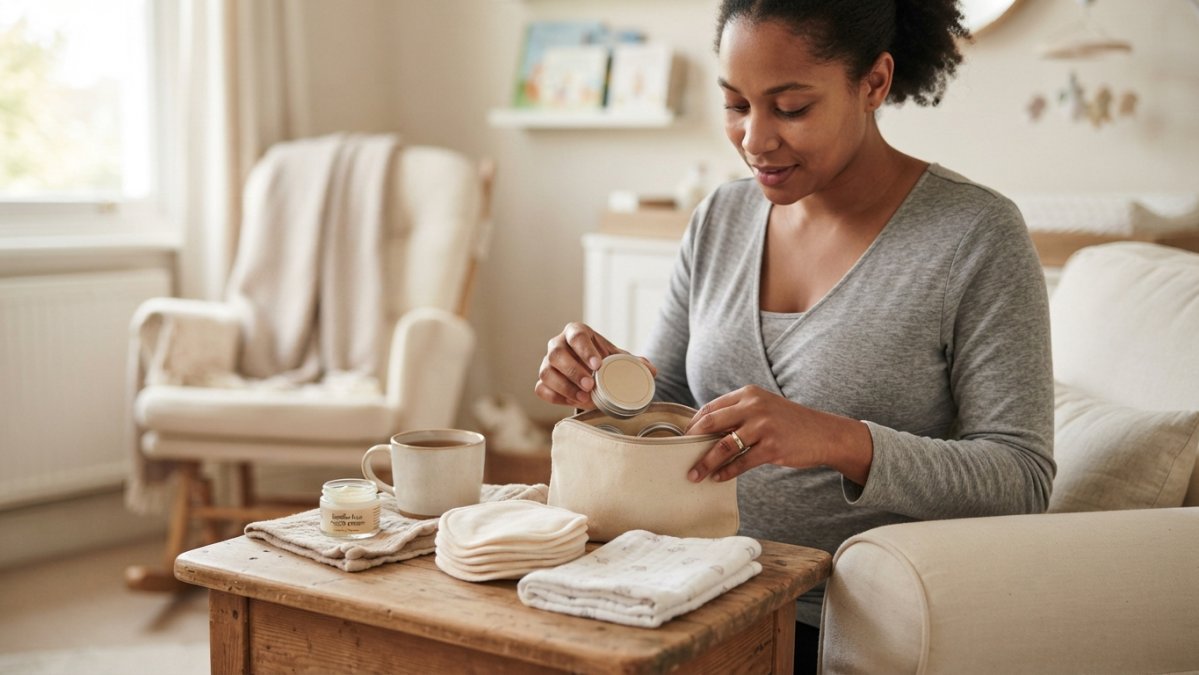
Build your nursing kit around the balm, not the other way round, because the balm is the item you will reach for most often in the first weeks. Keep the kit small enough to carry between rooms and refill it weekly.
Here is the short list we suggest:
| Item | Why it earns a spot | When you reach for it |
|---|---|---|
| Botanical nipple balm | Moisturizes and protects tender skin | After every feed or pump |
| Reusable breast pads | Catches leaks between feeds | All day, changed as needed |
| Burp cloth | Handles spit-up and let-down | Every feed |
| Water bottle | Nursing dehydrates you | During each session |
| Small pouch | Keeps everything in one place | Moving room to room |
Apply a small amount after nursing or pumping. If you are assembling the wider kit, our guide to building a postpartum self-care kit at home covers the rest of the recovery essentials.
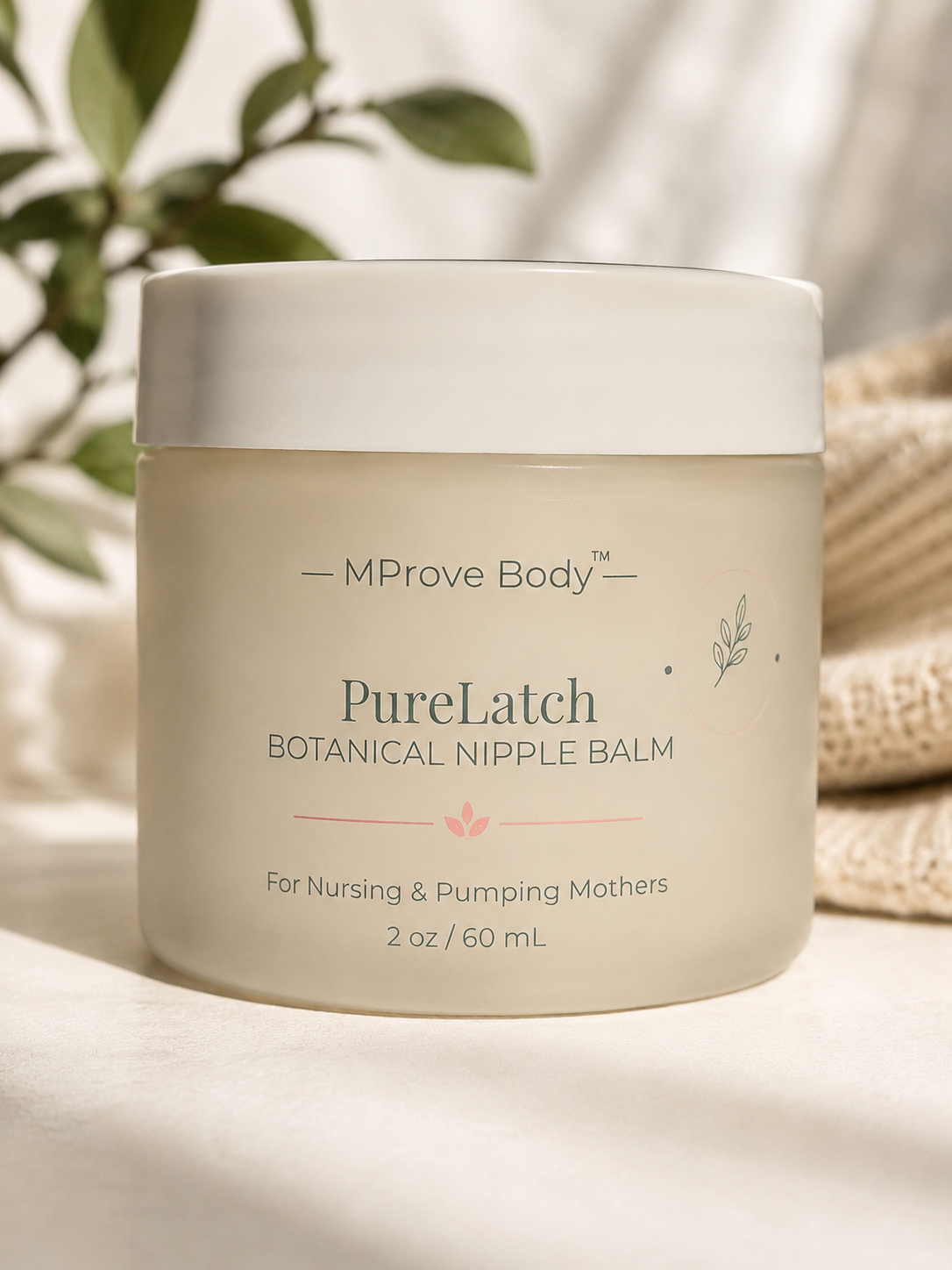
PureLatch Botanical Nipple Balm is our answer to the question this article started with, and it is the balm we would put in every kit. It is OB/GYN formulated, lanolin-free, and built on plant-based oils and butters including olive oil, coconut oil, shea butter, cocoa butter, sunflower oil, jojoba oil, marshmallow, chamomile, and vitamin E.
What it does, plainly: deeply moisturizes dry, tender nipple and areola skin, helps soothe and soften sensitive skin, and creates a nourishing moisture barrier between feeds. It was designed for pregnancy and postpartum care.
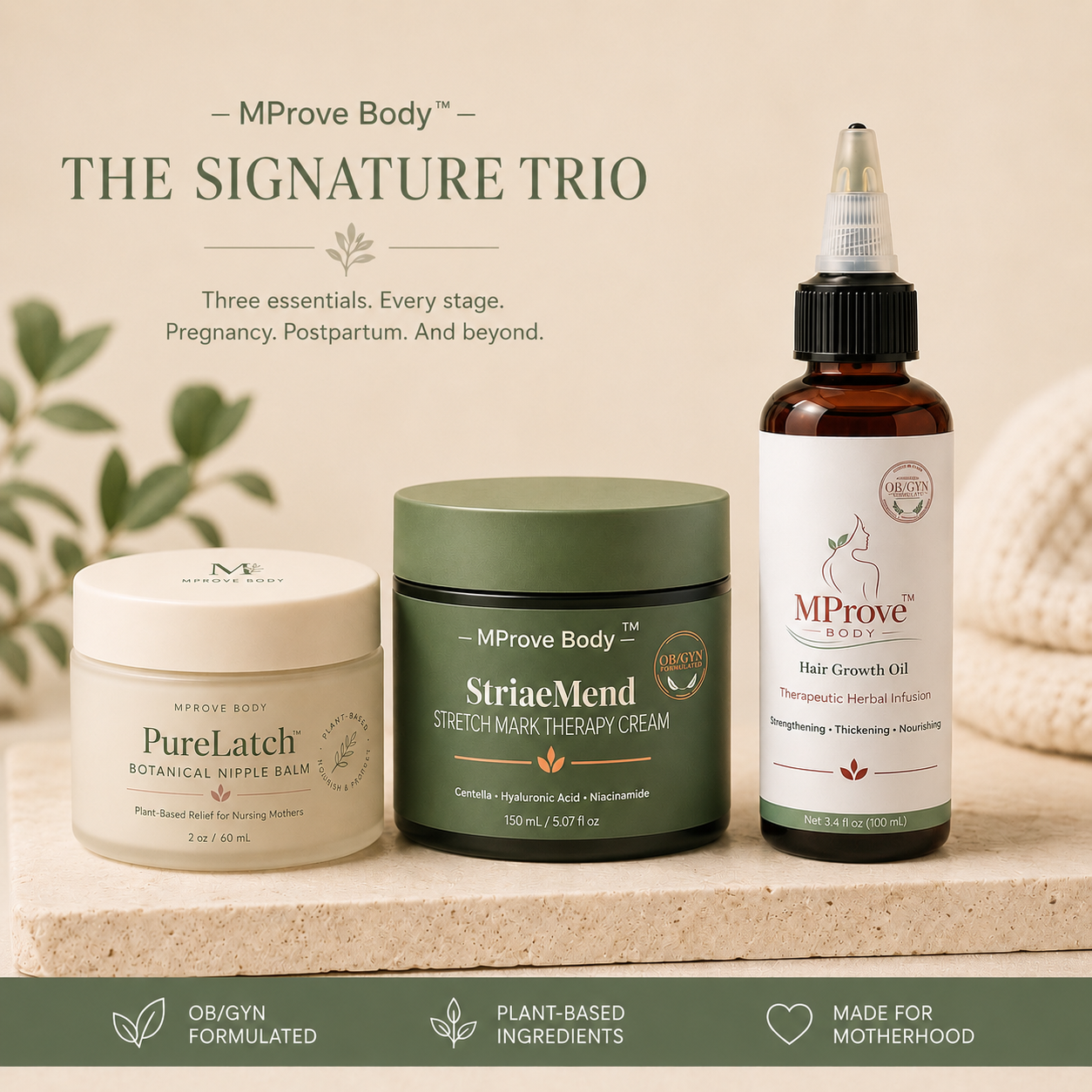
You can see the full formula and add it to your kit on the PureLatch product page. If you would rather start with a complete set, The Signature Trio bundle brings together PureLatch, StriaeMend Stretch Mark Therapy Cream, and MProve Body Hair Growth Oil.
Nursing asks a lot of your body in the first weeks, and the small things you keep within arm's reach make the difference between a routine that works and one that wears you down. MProve Body builds pregnancy and postpartum essentials from the ground up with a board-certified OB/GYN, using ingredient selection and formulas designed for pregnancy and postpartum recovery. Start with PureLatch, keep it where you nurse, and give tender skin the barrier it needs between feeds. Get started with MProve Body and build a nursing kit that supports you from the first feed onward.
Lanolin is a wax from sheep's wool, and some mothers prefer to avoid it. A lanolin-free nipple balm made with plant oils and butters, such as PureLatch, is an option if you want a fully plant-based routine.
Many mothers ask whether a nipple balm is appropriate during pregnancy. Mention any new product to your OB/GYN at your next visit, and check the ingredient list before use.
Apply a small amount after nursing or pumping so it has time to absorb, and check the label or ask your lactation consultant if you are unsure about using any product before a feed.
Look for short, recognizable lists: olive oil, coconut oil, shea butter, cocoa butter, sunflower oil, jojoba oil, marshmallow, chamomile, and vitamin E. A balm that is OB/GYN formulated and lanolin-free gives you a clear starting point, and you can compare labels in the store or online before you buy.


