Your cart is empty
Tax included and shipping calculated at checkout
Drawer menu
Tax included and shipping calculated at checkout

Last Updated: October 21, 2026
Pregnancy-safe mineral sunscreens for the face are not just body formulas in smaller tubes, and the best mineral sunscreens for pregnancy deserve a closer look.
At MProve Body, we formulate from a board-certified OB/GYN's perspective, and our advice to every expecting mother starts the same way: get the sunscreen right first.
Below, we break down which filters are worth questioning, why zinc oxide carries most of the load, and how to pick a face formula you will actually wear every morning.
Most guidance on sunscreen ingredients to avoid during pregnancy is more cautious than the evidence strictly requires, a reason to understand what you are avoiding, not to ignore it.
The main debate centers on chemical UV filters that absorb into the skin in small amounts. Oxybenzone and octinoxate draw the most attention because they are the most studied. Some regulators have restricted oxybenzone in certain products, and the FDA's sunscreen ingredient guidance has asked for more safety data on several organic filters used in US formulas.
Two practical points matter more than the chemistry lecture:
There is no confirmed link between sunscreen use in pregnancy and harm to a baby; the concern is precautionary.
The American College of Obstetricians and Gynecologists' skin care guidance treats sun protection as a routine part of pregnancy care, and dermatology bodies consistently recommend daily sunscreen for melasma. Mineral formulas exist so you can follow that advice without weighing filter absorption at all.
A zinc oxide sunscreen is the simplest answer to facial protection in pregnancy: a mineral filter with broad-spectrum coverage that rarely irritates reactive skin.
Zinc oxide sits on the skin and scatters and absorbs UV across UVA and UVB wavelengths; titanium dioxide leans toward UVB and short-wave UVA, so together they cover the full range.
What to look for on the label:
Non-nano formulas tend to feel richer, a texture trade-off, not a safety one. A formula that feels heavy gets under-applied, and under-application is the real failure mode.
Here are five mineral face sunscreens that meet the same bar: mineral-only filters, broad-spectrum coverage, SPF 30 or above, and a texture built for daily facial wear.
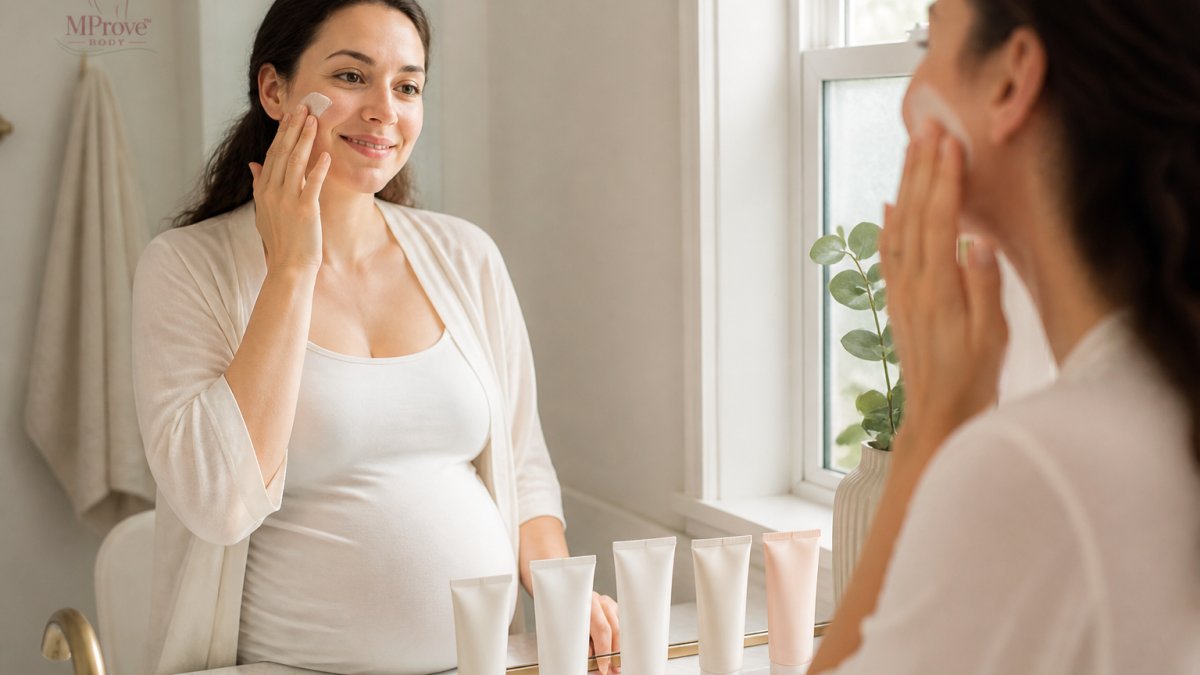
| Formula | Active Filters | SPF | Finish | Best For | Tint | Water Resistance | Format |
|---|---|---|---|---|---|---|---|
| Lightweight fluid | Non-nano zinc oxide | 30+ | Matte | Oily and acne-prone skin | Untinted | Varies, check label | Pump bottle |
| Hydrating cream | Zinc oxide + titanium dioxide | 30+ | Dewy | Dry skin | Untinted | Varies, check label | Tube |
| Tinted cream | Zinc oxide + iron oxides | 30-50 | Satin | Melasma-prone skin, medium to deep tones | Sheer to medium tint | Varies, check label | Tube |
| Stick | Zinc oxide | 30+ | Natural | Reapplication on the go, over makeup | Untinted or tinted | Often water-resistant | Twist-up stick |
| Powder | Zinc oxide + titanium dioxide | 30+ | Matte | Touch-ups over makeup, T-zone | Tinted | Not water-resistant | Brush or compact |
A few columns deserve a closer look:
We filtered on four criteria: mineral-only filters, broad-spectrum labeling, SPF 30 or above, and a face-specific format. Formulas that failed any one were dropped.
The second filter was wearability. A sunscreen that pills, stings the eyes, or leaves a grey cast on deeper skin tones gets abandoned by week two, so texture, eye comfort, and makeup compatibility weighed as heavily as the ingredient list.
Two things worth saying plainly. Price per ounce varies widely across formats, and a stick or powder usually costs more per gram than a cream. Availability also shifts; a formula easy to find this month may be reformulated next, so check the current ingredient list against the table before you buy.
Tinted mineral sunscreen in pregnancy solves two problems at once. The iron oxides that give the tint its color also help block visible light, the high-energy, non-UV portion of sunlight that triggers melasma, so you get coverage and broader protection from a single step.
Melasma is the mask-like pigmentation on cheeks, foreheads, and upper lips during pregnancy, driven by hormones plus sun exposure. UV is the main trigger, but visible light, especially blue-violet, is increasingly recognized as a contributor, particularly in deeper skin tones. Untinted mineral formulas block UV but let visible light through; iron oxides close that gap, making a tinted formula the more useful purchase if melasma is appearing.
A few things to know before you buy:
White cast is the main complaint about mineral formulas, and it is fair. Untinted zinc oxide can look chalky, especially on medium and deep skin tones, because the particles scatter visible light. Tinted versions correct most of that, and shade ranges have improved, but "improved" is not "solved."
What to check before you commit:
If melasma is already appearing, a tinted mineral formula is the more useful purchase than a plain one, and the iron oxides are the reason, not the color.
Knowing how to choose sunscreen during pregnancy comes down to three decisions: filter type, finish, and format.
Application is where most facial sunscreen routines quietly fail. The fix is sequence and quantity, not willpower.
Reapplication is the harder part. Practical options:
Reapply every two hours of sun exposure, and sooner after swimming or heavy sweating.
The hardest part of sun protection in pregnancy is not finding a safe formula. It is building a habit that survives morning sickness, broken sleep, and a schedule that no longer belongs to you.
That is the same problem we build for at MProve Body. Every product is formulated from the ground up by a board-certified OB/GYN with a background in chemistry, designed for the specific ways a pregnant and postpartum body changes.
Add to cart and start with the products built for this exact chapter.
Mineral formulas built on zinc oxide or titanium dioxide sit on top of the skin and are not absorbed to any meaningful degree, which is why they are the usual starting point for pregnancy. They also tend to irritate sensitive skin less than chemical filters. That said, no sunscreen is automatically safe for every person, so check the full ingredient list and ask your OB/GYN if you have a diagnosed skin condition or known allergy.
Yes. The iron oxides that give tinted mineral sunscreen its color add a practical bonus: they help block visible light, which some people with melasma find useful during pregnancy. Check that the tint comes from iron oxides rather than dyes or fragrance, and patch test on your jawline first. Tinted formulas also cut the white cast that puts many people off mineral face sunscreen.
Reapply roughly every two hours you spend outdoors, and sooner after swimming, heavy sweating, or blotting your face. Pregnancy skin can be more prone to pigmentation changes, so consistency matters more than the exact SPF number. A stick or powder formula makes midday reapplication over makeup far easier than cream, which is worth factoring in when you choose.
Titanium dioxide is a mineral filter that, like zinc oxide, stays largely on the skin surface and is widely used in pregnancy-friendly face formulas. It is often paired with zinc oxide to improve texture and reduce whitening. Avoid inhaling loose powders, and choose a cream or stick over a spray so you are not breathing in particles.
Pregnancy skin changes quickly, and the right facial sunscreen is only one piece of a routine that has to work on tired mornings. MProve Body formulates each product from the ground up with a board-certified OB/GYN, using clinically-informed ingredient selection and formulas designed specifically for pregnancy and postpartum recovery. Explore the range and build a routine that supports your skin through every stage. Add to cart to get started.


