Your cart is empty
Tax included and shipping calculated at checkout
Drawer menu
Tax included and shipping calculated at checkout

Last Updated: October 14, 2026
To stop postpartum hair shedding, it helps to understand that it's a normal response to hormonal shifts after childbirth. During pregnancy, elevated estrogen levels extend the growth phase of your hair cycle, keeping more strands on your head than usual. After delivery, estrogen drops sharply. This triggers a shift called telogen effluvium, where hair follicles move into a resting phase and eventually shed. It's not permanent hair loss, it's a temporary reset.
Most new mothers notice increased shedding between three and six months postpartum (ncbi.nlm.nih.gov). You might find more hair in your brush, shower drain, or on your pillow. This can feel alarming, but it's your body's natural response to hormonal change, not a sign of damage or disease.
The key distinction: postpartum hair shedding is different from hair breakage. Shedding means hair falls out from the root. Breakage means the hair shaft snaps mid-length, often from heat, tight styling, or dryness. You can have both happening at once, which is why a gentle hair-care routine matters now more than ever.
The foundation of managing postpartum hair shedding starts with how you handle your hair when it's wet and fragile.
Wash your hair with cool or lukewarm water, not hot. Hot water opens the hair cuticle and can increase breakage and dryness. Use a sulfate-free shampoo that won't strip natural oils from your scalp.
When you shampoo, focus on your scalp, not your hair length. Massage gently with your fingertips in circular motions. Avoid scratching or aggressive scrubbing. Rinse thoroughly with cool water to seal the cuticle back down.
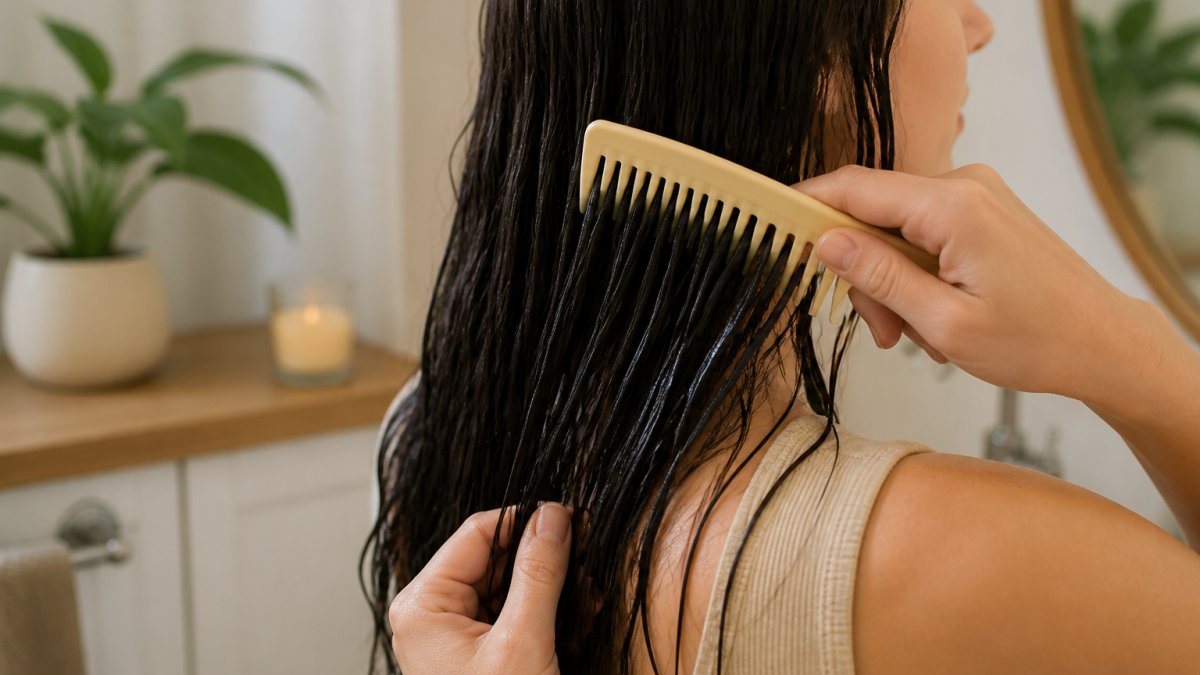
After washing, pat your hair dry with a soft towel. Don't rub or wring it out. Use a wide-tooth comb to detangle while hair is still damp. Start at the ends and work upward in small sections.
A common mistake is using a regular brush on wet hair. Wide-tooth combs reduce tension and snagging. They're worth the switch right now.
Reduce how often you wash. Many women find that washing two to three times per week, rather than daily, helps maintain scalp health and reduces overall stress on hair.
Heat styling accelerates breakage during postpartum recovery. Your hair is already shedding naturally, adding heat stress makes it worse. The solution is simple: minimize heat tools and use protective measures when you do style.
Avoid blow dryers, flat irons, and curling tools for now. If you must use heat, apply a heat-protectant product first and use the lowest temperature setting. Let your hair air-dry whenever possible. Air drying takes longer, but it prevents breakage and reduces overall damage.
Tight hairstyles, ponytails, buns, braids, and cornrows, create tension on hair follicles. This tension can trigger or worsen shedding, especially at your hairline and temples. Wear your hair down or in loose, low styles. If you need to pull it back, use soft hair ties and avoid pulling too tightly.
Sleep on a silk or satin pillowcase instead of cotton. Cotton creates friction that causes breakage as you move during sleep. Silk reduces that friction and is gentler on your hair overall. You'll notice the difference within a week.
Avoid chemical treatments right now. Hair coloring, relaxers, perms, and bleaching are all stressful to hair that's already in a vulnerable state. If you must color your hair, wait until shedding slows down, and use a gentle, ammonia-free dye.
Your hair needs targeted nourishment during postpartum recovery. The right products support your scalp environment and strengthen strands from root to tip.
Look for products with ingredients that support scalp health and hair strength. Natural oils are particularly effective during this phase. Coconut oil, jojoba oil, and sweet almond oil penetrate the hair shaft and reduce dryness. Argan oil adds shine and smoothness without heaviness.
Herbal ingredients like rosemary, amla, and brahmi have been used for centuries to support scalp health and hair vitality. These botanicals work by nourishing the scalp environment, which directly supports healthier hair growth.
MProve Body Hair Growth Oil is specifically formulated for postpartum hair recovery. It combines batana oil, rosemary, amla, and other botanicals with jojoba oil, sweet almond oil, coconut oil, and vitamin E.

Apply the oil directly to your scalp and massage gently. Distribute it through your hair from roots to ends as needed. Use it two to four times weekly as part of your regular hair-care routine.
Pair your oil treatment with a sulfate-free conditioner. Conditioner seals moisture into the hair shaft and protects against breakage. Apply it to the ends of your hair after shampooing, and leave it on for at least two minutes before rinsing.
Month 0-2: The calm before. Estrogen is still elevated from pregnancy, so you're likely holding onto extra hair. Many women notice their hair looks thicker than usual. Shedding is minimal.
Month 3-4: Onset. Shedding begins. You'll notice more strands in your brush, on your pillow, and wrapped around your fingers in the shower. The volume is noticeable but not yet alarming.
Month 4-6: Peak. This is the heaviest phase. Loose hairs come out in handfuls during washing and styling. Drain hair becomes a daily sight.
Month 6-9: Taper. Shedding gradually slows. Regrowth begins. You'll notice short 'baby hairs' along your hairline and part, often sticking up at odd angles. This is a good sign, not a bad one.
Month 9-12: Return to baseline. Most women find shedding has returned to pre-pregnancy levels. Density may still feel thinner than during pregnancy, because pregnancy density was artificially elevated.
The expectation almost every article gets wrong: Hair-care changes do not stop postpartum hair shedding when it's hormonally driven. Switching to sulfate-free shampoo, oiling your scalp, or sleeping on silk will not slow the shedding phase itself.
A small number of women shed beyond twelve months.
What you eat directly affects your hair. During postpartum recovery, your body is healing from childbirth, producing milk if you're breastfeeding, and managing hormonal shifts. Your hair needs adequate nutrition to stay strong during this demanding time.
Iron is critical. Postpartum iron deficiency is common, especially after blood loss during delivery (the WHO). Low iron can worsen shedding. Eat iron-rich foods like lean red meat, poultry, beans, and leafy greens.
Protein supports hair structure. Hair is made of a protein called keratin. Eat adequate protein at each meal: eggs, fish, chicken, Greek yogurt, legumes, and nuts all provide the building blocks your hair needs.
B vitamins support the hair growth cycle. Biotin, B6, and B12 are especially important. You can get these from eggs, fish, meat, dairy, and fortified grains.
Zinc and selenium support scalp health. Oysters, beef, pumpkin seeds, and Brazil nuts are good sources. These minerals help maintain a healthy scalp environment where hair can grow.
Stay hydrated. Drink plenty of water throughout the day. Hydration supports all your body's systems, including hair growth. Aim for at least eight glasses daily, more if you're breastfeeding.
Most postpartum shedding is normal and resolves on its own. But 'most' isn't 'all,' and the difference between waiting it out and getting help comes down to a few specific signs. Here's how to tell which camp you're in.
Normal shedding vs. red flags
Normal postpartum shedding looks like: diffuse thinning across the whole scalp, more hair in the brush and drain, baby hairs returning by month nine, and no bald patches. It's annoying, but it's evenly distributed and it's temporary.
Red flags that warrant a doctor's visit:
What your doctor will likely check
If you bring up persistent or unusual shedding, a thorough workup usually includes:
When to push for answers
If you're past the twelve-month mark and still shedding heavily, or if you have any of the red flags above, don't wait. Ask your doctor specifically about ferritin, thyroid, and vitamin levels. These are simple blood tests, and they can rule out the most common treatable causes. If your doctor dismisses your concerns as 'just postpartum,' it's reasonable to ask for a referral to a dermatologist or endocrinologist.
If you're breastfeeding
Most gentle topical products and natural oils are considered safe during breastfeeding, but any supplement, prescription treatment, or topical medication should be cleared with your doctor or a lactation consultant first. This includes over-the-counter hair-growth supplements, which may contain ingredients that aren't recommended while nursing.
Postpartum hair shedding is completely normal and affects most mothers. During pregnancy, elevated estrogen keeps more hairs in the growth phase, creating thicker hair. After childbirth, estrogen drops sharply, causing hairs to shift into the telogen (resting) phase simultaneously. This synchronized shedding typically peaks 2-4 months postpartum but is temporary. Hair regrowth usually begins within 6-12 months as hormone levels stabilize.
Breastfeeding alone does not worsen postpartum hair shedding. The hair loss is driven by hormonal shifts after delivery, not lactation itself. However, breastfeeding mothers need adequate nutrition and hydration to support both milk production and hair regrowth. Ensure you're consuming enough iron, protein, and calories, as nutritional deficiencies can slow hair recovery.
Contact your healthcare provider if shedding is severe, accompanied by scalp pain or inflammation, or continues beyond 12-15 months postpartum. Excessive hair loss can occasionally signal thyroid dysfunction, iron deficiency, or other conditions that respond to treatment. Your doctor can run simple blood tests to check thyroid function and iron levels. Early intervention makes a difference, so don't wait if something feels off.
Yes. Look for products free from parabens, phthalates, and artificial dyes. Botanical oils like coconut, jojoba, and argan oil are safe and nourishing. The MProve Body Hair Growth Oil is formulated without harmful chemicals and includes ingredients like rosemary, amla, and batana oil that support scalp health and reduce breakage. Always patch-test new products and consult your doctor if you have concerns about specific ingredients.


