• Posted on

Pregnancy Skincare Routine: Stretch Marks & Nipple Care

Pregnancy Skincare Routine: Stretch Marks & Nipple Care

Table of Contents

Last Updated: October 7, 2026

Why Pregnancy Skincare Needs a Different Approach

Pregnancy skincare is the practice of adjusting your daily routine so that every ingredient, texture, and application method accounts for the physiological changes of pregnancy and breastfeeding.

The most common mistake is treating pregnancy as a nine-month pause on skincare rather than a redesign of it. Two things happen at once. First, your body redirects resources: blood volume rises, hormones shift, and collagen production comes under strain as skin stretches. Second, the list of ingredients you can safely use narrows.

Below, we break down how skin changes trimester by trimester, which ingredients to avoid and what to swap in, how to think honestly about stretch mark prevention, and how to handle nipple care if you're nursing.

StriaeMend | Stretch Mark Therapy Cream
Watch Out The biggest pitfall is assuming "natural" means "safe during pregnancy." Botanical essential oils and plant extracts can irritate sensitive skin just as easily as synthetic ingredients, and some are best avoided entirely. Read the full ingredient list, not the front of the bottle.

How Skin Changes Through Each Trimester

Skin changes during pregnancy follow a fairly predictable arc, though the timing varies from person to person. In the first trimester, rising hormone levels often increase oil production, which can trigger acne and pregnancy-related breakouts along the jawline and chin. Some women notice the opposite, with skin turning drier and more reactive than usual.

The second trimester is when stretch marks most often begin to appear, as the belly, breasts, hips, and thighs expand. Melasma and hyperpigmentation also commonly develop now, driven by increased melanin production. Sun exposure makes both worse.

By the third trimester, dryness and itching are the dominant complaints. Skin stretched over a growing belly has less moisture to spare, and the resulting tightness can be genuinely uncomfortable. This is the stage where a consistent moisturizing routine pays off most.

Trimester Most Common Skin Change What Helps Most
First Breakouts, oiliness or dryness Gentle cleansing, light moisturizer
Second Stretch marks, melasma Daily body cream, sun protection
Third Dryness, itching, tightness Rich moisturizer, fragrance-free products
Postpartum Dryness, loss of elasticity Continued hydration, nipple care if nursing

Pregnancy Skincare Ingredients to Avoid (and Safer Swaps)

The clearest ingredient to avoid in pregnancy skincare is retinol and other retinoids. High doses of vitamin A derivatives are linked to birth defects, and while topical absorption is far lower than oral dosing, most dermatologists and OB/GYNs recommend avoiding them entirely as a precaution. Salicylic acid in high concentrations, hydroquinone, and certain essential oils such as clary sage and rosemary also warrant caution.

The American College of Obstetricians and Gynecologists guidance on skin conditions during pregnancy is a useful reference point for what's generally considered acceptable, though your own OB/GYN should have the final say on anything you're unsure about.

Safer swaps that do real work:

  • Retinol → Niacinamide. Supports the skin barrier and improves the look of texture without the retinoid risk.
  • Hydroquinone → Vitamin C. A gentler route to brightening for melasma-prone skin.
  • Heavy exfoliating acids → Azelaic acid. Often recommended for pregnancy-related breakouts.
  • Fragranced lotions → Fragrance-free moisturizing cream. Fewer flare-ups on sensitive skin.
Pro Tip Patch-test any new product on the inner forearm for 48 hours before using it on your belly or breasts. If you've had a reaction to a "natural" product before, this step is not optional. Stop using anything that causes burning, redness, or a rash, and check with your provider before trying the next option.

Pregnancy Stretch Mark Cream: What to Look For and When to Start

A pregnancy stretch mark cream is a moisturizing product formulated to support skin elasticity and hydration on the areas that stretch most: the belly, breasts, hips, and thighs.

What separates a useful cream from a basic lotion comes down to ingredients that support the skin barrier and hold moisture in place. Look for Centella Asiatica, hyaluronic acid, niacinamide, shea butter, cocoa butter, jojoba oil, and squalane.

Our StriaeMend Stretch Mark Therapy Cream was built around exactly this list.
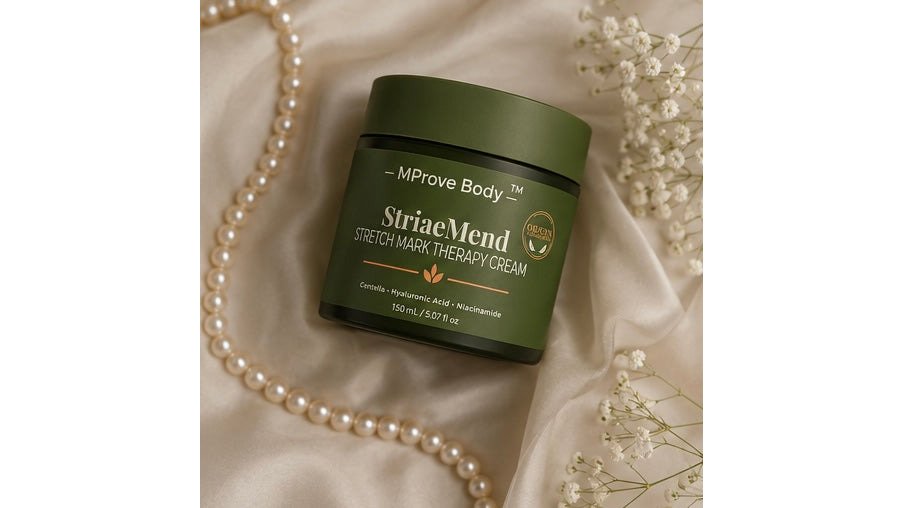
StriaeMend | Stretch Mark Therapy Cream

Evidence-Based Expectations for Stretch Mark Prevention

Here's the honest answer most product pages won't give you: no cream has been proven to prevent stretch marks entirely. Whether you develop them depends heavily on genetics, how quickly your skin stretches, and your baseline skin elasticity.

What moisturizing products can realistically do is keep skin supple, reduce itching and tightness, and improve the appearance of existing marks over time. That's a meaningful outcome, but it isn't the same as a guarantee. Anyone promising you zero stretch marks is selling you something.

It also helps to separate prevention from treatment. For prevention, the goal is daily hydration and supporting elasticity before marks form. For existing marks, the goal shifts to improving texture and fading over months, not weeks.

How to Apply for Best Results

Application technique matters as much as the formula. Apply to damp skin within three minutes of showering to lock in moisture, then reapply to the belly, breasts, hips, and thighs twice daily if you can manage it. Use gentle, upward strokes rather than vigorous rubbing, especially over the belly. If you're prone to itching, keep a tube by the bed for overnight reapplication.

Itchy Skin During Pregnancy Remedies That Actually Help

Itchy skin during pregnancy usually responds best to consistent moisturizing, cool compresses, and avoiding hot showers that strip the skin further. Apply moisturizer within three minutes of getting out of the bath, while skin is still damp, and reapply to the belly and breasts as often as needed.

A few remedies that genuinely help:

StriaeMend | Stretch Mark Therapy Cream →

  • Take lukewarm rather than hot showers
  • Switch to a fragrance-free, dye-free laundry detergent
  • Wear soft, breathable cotton against your skin
  • Keep a moisturizing cream by the bed for overnight reapplication
  • Stay hydrated through the day

If itching is severe, comes with a rash, or keeps you awake at night, contact your provider. Persistent intense itching, particularly on the palms and soles, needs to be assessed rather than treated at home (the NHS). The NHS guidance on itching in pregnancy outlines when to seek medical advice.

Nipple Balm for Pregnancy and Breastfeeding: Safety and Use

A nipple balm for pregnancy and breastfeeding is a moisturizing product applied to the nipple and areola to soothe dryness, cracking, and tenderness during nursing and pumping. Safety comes down to one principle: if it goes on your nipples, assume some of it may reach your baby, and choose accordingly.

Lanolin is the traditional option, but it doesn't suit everyone. Some mothers react to it, and it can feel heavy and sticky.

Our PureLatch Botanical Nipple Balm is lanolin-free and OB/GYN formulated, designed for pregnancy and postpartum care. A little goes a long way. Apply a small amount to the nipple and areola as needed, particularly after nursing or pumping.

PureLatch | Botanical Nipple Balm
Best For Breastfeeding and pumping mothers who want a lanolin-free, plant-based balm for dry, tender skin, and anyone who has reacted badly to a conventional nipple cream in the past.

What to Look for in a Breastfeeding-Safe Nipple Balm

The safest nipple balms share a short, recognizable ingredient list and avoid added fragrance, preservatives, and anything you can't pronounce. Look for food-grade or plant-based oils and butters, and check whether the product needs to be wiped off before feeding. Most modern balms do not, but confirm it on the label rather than assuming.

Ingredient suitability is the first filter. Avoid balms with added fragrance, alcohol, or essential oils that can irritate cracked skin. If a product stings when you apply it, that's a sign your skin barrier is compromised and you should switch to something simpler.

Removal Before Feeding and When to Seek Help

If you're using a thicker balm or one that isn't labeled as safe to leave on, wipe the nipple gently with a warm damp cloth before feeding. For most plant-based balms designed for breastfeeding, removal isn't required, but always check the packaging. If you're pumping, apply balm after pumping rather than before to avoid residue in the pump parts.

Persistent nipple pain, cracking that doesn't improve within a few days, or signs of infection like redness, swelling, or flu-like symptoms need clinical attention. A lactation consultant can check your latch, which is often the real cause of persistent nipple damage, and confirm the product fits your routine. If you're working with one, bring your balm to the appointment.

Building Your Full Routine: Face, Body, and Breasts

A complete pregnancy skincare routine is built in three zones, and each one needs different treatment. Your face needs gentle cleansing, a barrier-supporting moisturizer, and daily sun protection to manage melasma. Your body needs consistent hydration on the belly, hips, thighs, and breasts, applied twice daily if you can manage it. Your breasts need dedicated nipple care once nursing begins.

If you'd rather not assemble this piece by piece, The Signature Trio Complete Motherhood Essentials Bundle brings together StriaeMend, PureLatch, and our Hair Growth Oil in one set at $74.99, covering stretch mark care, nipple care, and postpartum hair shedding in a single purchase.

The Signature Trio | Complete Motherhood Essentials Bundle
Key Takeaway The routine that works is the one you'll actually keep up with. Two applications a day of a product you like beats five applications of one you dread using.

Conclusion: A Routine That Adapts With You

Pregnancy skin doesn't follow a script, and the routine that suits you at 12 weeks may need adjusting by 36. The work is in paying attention to what your skin is telling you and changing products when it changes its mind.

At MProve Body, every product is formulated by a board-certified OB/GYN and developed from the ground up rather than selected from a manufacturer's catalog. StriaeMend supports elasticity and hydration on stretching skin, PureLatch soothes and protects tender nipples without lanolin, and the Signature Trio bundles both with our Hair Growth Oil for the postpartum months. Get started with MProve Body and build a routine that adapts as your body does.

Frequently Asked Questions

What skincare ingredients should you avoid during pregnancy?

The main ingredients to avoid are retinoids (retinol, tretinoin, adapalene), high-dose salicylic acid peels, and hydroquinone. Retinoids carry a known risk of birth defects. For acne, most dermatologists consider topical benzoyl peroxide and low-concentration glycolic acid safe, but check with your OB/GYN before adding any active ingredient. When in doubt, stick to hydrating and barrier-supporting ingredients like hyaluronic acid, niacinamide, and shea butter.

When should you start using a pregnancy stretch mark cream?

Start as early as the first trimester, before stretch marks appear. Stretch marks form when skin stretches faster than it can maintain elasticity, so daily moisturizing from the beginning supports skin suppleness as your belly grows. Apply a cream-serum like StriaeMend to your belly, hips, thighs, and breasts once or twice daily. Consistent use matters more than which week you begin.

Is nipple balm safe to use during pregnancy and breastfeeding?

Yes, if you choose the right formula. Look for plant-based balms made with food-grade oils and butters, such as olive oil, coconut oil, shea butter, and jojoba oil. Avoid balms with synthetic fragrance, preservatives, or lanolin if you have a sensitivity. PureLatch is lanolin-free and formulated with botanicals like marshmallow and chamomile. Wipe the nipple before nursing if you prefer, though most botanical balms do not require removal.

Can you actually prevent stretch marks during pregnancy?

You cannot guarantee prevention, since genetics and rapid weight gain play large roles. However, keeping skin well-moisturized and supporting elasticity with ingredients like Centella Asiatica, hyaluronic acid, and niacinamide can reduce the appearance and severity of stretch marks. Daily use of a stretch mark cream from early pregnancy gives your skin the best chance of maintaining suppleness as it stretches.

How do you care for dry or itchy skin during pregnancy?

Dry, itchy skin is common as your belly expands and hormones shift. Apply a fragrance-free moisturizer or body butter immediately after showering while skin is still damp. Choose lukewarm water over hot, and avoid harsh soaps. If itching is severe or comes with a rash, contact your healthcare provider, as it can signal a condition called cholestasis that needs medical attention.

Which skincare products are safe to use while breastfeeding?

Most pregnancy-safe products remain safe during breastfeeding. Continue avoiding retinoids and high-dose salicylic acid. For nipple care, use a lanolin-free botanical balm that does not need to be wiped off before feeding. For stretch marks and body care, a hydrating cream with Centella Asiatica, shea butter, and squalane supports skin recovery without transferring harmful ingredients to your baby.

Leave a comment

Please note, comments must be approved before they are published

Read Also

See all MProve Journal
How to Treat Hormonal Acne During Pregnancy
  • Posted on
How to Treat Hormonal Acne During Pregnancy
Learn how to treat hormonal acne during pregnancy safely. Explore pregnancy-safe ingredients, what to avoid, and a gentle routine for clearer skin.
Why Is Breastfeeding So Painful?
  • Posted on
Why Is Breastfeeding So Painful?
Breastfeeding is often described as one of the most natural parts of motherhood. What is discussed far less often is this: Breastfeeding can hurt. In the first days after delivery, your breasts and nipples are adjusting to something completely new—frequent feeding, increased blood flow, rapidly changing milk production, and hours of repeated contact with your baby’s mouth. Some tenderness during this transition can happen. But severe pain, cracked or bleeding nipples, or pain that continues throughout every feeding should not simply be dismissed as “part of breastfeeding.” Understanding why it hurts is the first step toward making it better. The First Few Days Can Be Tender Early nipple sensitivity is common, particularly during the first several days of breastfeeding. Your baby may nurse 8–12 times or more in a 24-hour period. Even with a good latch, that is a significant amount of new stimulation to delicate skin. You may notice tenderness when your baby initially latches that improves shortly after feeding begins. The nipples may also feel more sensitive between feeds. What we don’t want is pain that is intense, worsening, or lasts throughout the entire feeding. Sometimes the Problem Is the Latch One of the most common reasons breastfeeding hurts is a shallow or ineffective latch. When your baby takes only the nipple rather than a deeper portion of the breast into the mouth, pressure and friction become concentrated on the nipple. You may notice: Pinching, biting, or sharp pain while nursing Cracked, blistered, or bleeding nipples A nipple that looks flattened, creased, or “lipstick-shaped” after feeding Clicking sounds during feeding A baby who repeatedly slips off the breast Very long or frustrating feeding sessions Breastfeeding shouldn’t require you to endure significant pain to make it work. A lactation consultant can observe an entire feeding and help determine whether positioning or latch is contributing. Engorgement Can Hurt Too When mature milk begins to come in, your breasts may suddenly feel much larger, firmer, warmer, and more uncomfortable. This is engorgement. Some fullness is expected as milk production increases, but significant engorgement can make the breast so firm that it actually becomes more difficult for a newborn to latch deeply. Frequent feeding, appropriate milk removal, cold therapy between feeds, and addressing latch problems can help. Pumping Can Cause Nipple Pain Breast pumps are incredibly useful—but pumping shouldn’t injure you. Pain during pumping may occur when the flange doesn’t fit correctly, suction is unnecessarily high, or pumping sessions create excessive friction. More suction does not automatically mean more milk. If pumping leaves your nipples swollen, irritated, cracked, or extremely sore, reconsider your flange size and pump settings rather than simply trying to tolerate the discomfort. Your Nipple Skin May Need Some Extra Care Think about what nipple skin experiences during early breastfeeding: moisture, friction, frequent feeding or pumping, breast pads, leaking milk, and repeated cleaning. That skin barrier can become irritated quickly. Gentle nipple care matters. Avoid aggressively scrubbing the nipples or repeatedly using harsh soaps. Allowing the area to dry and using an appropriate nipple-barrier product can help protect irritated skin from additional friction and moisture loss. This is one of the reasons I formulated PureLatch Botanical Nipple Balm as part of MProve Body’s postpartum collection—to provide a simple option for nipple and skin care during the breastfeeding journey. A balm can support and protect irritated skin, but persistent breastfeeding pain still deserves evaluation. Treating the skin alone won’t correct an underlying latch or feeding problem. Breast Pain Isn’t Always Coming From the Nipple Sometimes the nipple isn’t the primary source of pain. Breastfeeding parents may experience localized breast tenderness, inflammation, plugged or narrowed ducts, or mastitis. Mastitis may cause an increasingly painful, swollen, red or warm area of the breast and can sometimes be accompanied by fever, chills, body aches, or a generally ill feeling. New or worsening breast pain—particularly when accompanied by systemic symptoms—should prompt a call to your healthcare professional. Burning or Shooting Pain Deserves Attention Burning, shooting, or throbbing nipple or breast pain can have several potential causes. One possibility is nipple vasospasm, in which blood vessels constrict and the nipple may turn white or change colors after feeding. Cold temperatures can make the pain worse. Dermatitis, bacterial infection, trauma, and other conditions can also cause persistent nipple or breast pain. Because different causes can feel surprisingly similar, persistent pain is worth evaluating rather than assuming that every burning sensation is “thrush” or treating yourself repeatedly without knowing the cause. Your Baby May Need to Be Evaluated Too Sometimes breastfeeding pain isn’t solely about the breast. A baby’s positioning, sucking mechanics, oral anatomy, prematurity, neurologic development, or other feeding difficulties can affect milk transfer and contribute to nipple trauma. If feeding remains painful despite adjusting positioning and latch, an assessment of both mother and baby may be helpful. So, Is Breastfeeding Supposed to Hurt? Here’s the distinction I want mothers to remember: Tender can happen. Injured shouldn’t be the expectation. Brief discomfort during the initial adjustment to breastfeeding is different from dreading every feeding because you know it is going to hurt. Cracked or bleeding nipples, severe pain, worsening breast pain, fever, recurrent feeding difficulties, or pain that isn’t improving are reasons to ask for help. And asking for help does not mean you’ve failed at breastfeeding. Breastfeeding is something you and your baby are learning together. Sometimes that learning curve needs a little support. Dr. Rakiya V. F. Miller, MD, FACOGBoard-Certified OB/GYNFounder, MProve Body This article is for educational purposes and is not a substitute for individualized medical care. Contact your healthcare professional or lactation specialist if you have concerns about breastfeeding, breast pain, or your baby’s feeding.
The Three Hero Ingredients Behind StriaeMend™ (And Why I Chose Them)
  • Posted on
The Three Hero Ingredients Behind StriaeMend™ (And Why I Chose Them)
The Three Hero Ingredients Behind StriaeMend (And Why I Chose Them) Pregnancy changes your body in incredible ways. Your skin stretches faster than it ever has before, collagen and elastin are placed under tremendous stress, and hydration becomes more important than ever. When I developed StriaeMend™ Stretch Mark Therapy Cream, I wasn’t interested in adding trendy ingredients just because they were popular. As an OB/GYN, I wanted ingredients supported by research and chosen for a specific purpose. After reviewing the evidence and testing countless combinations, three ingredients consistently stood above the rest. 1. Centella Asiatica The Collagen Support Powerhouse If there is one botanical ingredient that has earned its reputation in skincare, it’s Centella Asiatica, sometimes called Cica or Tiger Grass. Centella contains naturally occurring compounds known as asiaticosides and madecassosides, which have been studied for their ability to support collagen production and healthy skin remodeling. Why does that matter? Stretch marks develop when the deeper layers of skin are unable to keep up with rapid stretching. While no topical product can completely prevent stretch marks, supporting the skin’s natural repair processes may help improve elasticity and the overall appearance of stretch marks over time. This ingredient became non-negotiable in my formula. Why I love it: Supports healthy collagen production Helps improve skin elasticity Promotes smoother-looking skin Helps calm stressed skin during pregnancy and postpartum 2. Hyaluronic Acid Deep Hydration Where Skin Needs It Most One of the biggest mistakes people make is thinking hydrated skin simply means skin that feels soft. Healthy hydration affects how skin stretches, recovers, and maintains its barrier. Hyaluronic Acid is remarkable because it attracts and holds large amounts of water within the skin. Well-hydrated skin tends to feel more supple, resilient, and comfortable as your body changes throughout pregnancy. As your belly grows, your skin is constantly adapting. Giving it lasting hydration helps support that process. Why I chose it: Provides intense hydration Helps skin feel plump and supple Supports the skin barrier Helps improve overall skin texture 3. Niacinamide The Multi-Tasking Skin Optimizer Few skincare ingredients are as versatile as Niacinamide, a form of Vitamin B3. It supports the skin barrier, helps improve uneven skin tone, and enhances the overall appearance of skin. For women who already have stretch marks, improving skin texture and supporting a healthy skin barrier are just as important as maintaining hydration. That’s why Niacinamide earned a permanent place in StriaeMend. Benefits include: Supports the skin’s natural barrier Helps improve uneven skin tone Promotes smoother-looking skin Works synergistically with Hyaluronic Acid and Centella Asiatica Why These Three Work Better Together Great skincare isn’t about finding one miracle ingredient. It’s about creating a formula where every ingredient complements the others. In StriaeMend: Centella Asiatica supports collagen and skin remodeling. Hyaluronic Acid delivers long-lasting hydration and helps maintain skin suppleness. Niacinamide strengthens the skin barrier while helping improve texture and tone. Together, they create a comprehensive approach to supporting skin during one of life’s biggest transformations. Why I Formulated StriaeMend As both an OB/GYN and a mom, I knew women deserved more than another cream filled with marketing promises. I wanted a formula built around ingredients I would confidently recommend to my own patients and use on my own skin. Every ingredient in StriaeMend was chosen with intention. These three simply became the foundation everything else was built around. Because motherhood changes your body. Your skincare should be designed to support it. With care, Rakiya V. F. Miller, MD, FACOGFounder, MProve Body
The Story Behind StriaeMend™: Where It All Began
  • Posted on
The Story Behind StriaeMend™: Where It All Began
Long before I became pregnant, I experienced stretch marks. Like many women, I developed them across my hips during puberty. My body was growing and changing as it should, but all I saw were the marks. That experience stayed with me. Years later, as an OB/GYN, I gained a deeper understanding of why stretch marks form and how we can support our skin. Then I became pregnant with my daughter. As both an expectant mother and physician, I understood the science of skin stretching. I knew no product could guarantee prevention, but supporting the skin’s barrier, hydration, and elasticity could help it adapt. So I began searching. I wanted a product with ingredients I trusted, backed by science, and chosen with care. I looked for hyaluronic acid for hydration, niacinamide to support the skin barrier, and Centella asiatica for its role in collagen support and repair. I couldn’t find it. Some products included a few of these ingredients, but not all. Others relied on fragrance or oils while lacking the actives I valued most. So I created my own. I combined the ingredients that mattered into a cream I wanted to use daily. It wasn’t about making another pregnancy cream. It was about creating what I wished existed. Each evening became a ritual. My husband would gently massage the cream onto my growing belly before bed each night. Those quiet moments became our favorite part of pregnancy. A time to slow down, connect with our daughter, and care for my changing body. That routine became more than skincare. It reminded me that our bodies deserve care, not criticism. That stretch marks reflect growth, not failure. That pregnancy transforms us in powerful ways. And that caring for yourself is not vanity, it’s self-love. Later, that formula became StriaeMend™. Today, it reflects the same philosophy: combine evidence-informed ingredients like hyaluronic acid, niacinamide, and Centella asiatica into a luxurious formula that supports hydration and elasticity during pregnancy and beyond. Created by an OB/GYN. Inspired by my journey. First trusted on the skin that mattered most, my own.
Where are we now???
  • Posted on
Where are we now???
  Building MProve Body has been one of the most rewarding and challenging journeys of my life. Over the past several years, I’ve been working behind the scenes to create the products I wish I had during my own pregnancy and postpartum journey. Every formula has been researched, refined, and developed with intention, combining my background in chemistry, my experience as an OB/GYN, and, most importantly, my perspective as a mom. This season of life has also meant balancing my career as a physician, building a business from the ground up, making time for my family, and chasing after my now 9 month old daughter, Zaila, who recently started crawling. It has been busy, exhausting, humbling, and incredibly fulfilling all at once. Here’s what we’ve been working on: ✨ Finalizing our product packaging and branding✨ Launching our new website✨ Preparing our Amazon storefront✨ Completing product testing and manufacturing✨ Filing three new trademark applications to protect the growing MProve Body family✨ Growing the MProve Journal into a trusted educational resource for women through every stage of motherhood There have been countless late nights, revisions, unexpected challenges, and moments of learning, but every step has brought us closer to this moment. MProve Body has always been about more than products. It’s about empowering women with thoughtfully formulated, evidence based care through pregnancy, postpartum, and beyond, while creating a trusted space where women can learn, feel supported, and know they’re not navigating motherhood alone. Today, I’m excited to share that our website is officially live! You can now explore the MProve Journal, learn about our products, follow our journey, and be among the first to see what’s coming next. While we’re still putting the finishing touches on a few things before product launch, this is the beginning of something I’ve dreamed about for a long time. To everyone who has supported me along the way, thank you. Your encouragement, prayers, and belief in this vision have meant more than words can express. I can’t wait to continue this journey with you. Visit us at MProveBody.com and let me know what you think. I’m so excited to welcome you to MProve Body. The best is yet to come. Rakiya Miller, MD, FACOGFounder, MProve Body
Meet the Founder of MProve Body
  • Posted on
Meet the Founder of MProve Body
Hi, I’m Dr. Rakiya Miller — board-certified OB/GYN, wife, mother, and founder of MProve Body. Long before I became a physician, I was a chemistry major with a love for creating and experimenting. I’ve always been fascinated by how ingredients work together and how thoughtful formulations can make a real difference in people’s lives. When I became pregnant, I searched for products that contained all of the ingredients I wanted for my changing body. I found myself buying multiple products and layering them together, yet I still couldn’t find exactly what I was looking for. As a physician, I understood the science behind the ingredients. As a mom-to-be, I understood the need. So I did what I’ve always loved to do—I started formulating. What began as a personal solution quickly became a passion project. I created products designed to support women through pregnancy, postpartum recovery, and beyond, combining ingredients I trusted with the clinical perspective I bring as an OB/GYN. Every formula is personally developed by me. I don’t purchase pre-made formulations or select products from a manufacturer’s catalog. From ingredient selection to the final formula, each product is thoughtfully created from the ground up using my background in chemistry, my experience as a physician, and my personal journey through pregnancy and motherhood. For a while, these formulations were just for me. Then my husband encouraged me to stop keeping my ideas to myself and share them with other women who might be looking for the same things I was. That encouragement became MProve Body. Today, every product we create is inspired by real experiences, guided by science, and formulated with intention. My goal is simple: to create products I would confidently recommend to my own patients, use on myself, and share with the women I love most. MProve Body is more than a brand—it’s my heart, my science, and my commitment to helping women feel supported, cared for, and confident through every stage of their journey. Thank you for being here from the beginning. This is only the start. 🤍 — Rakiya Miller, MD, FACOGFounder • Formulator • OB/GYN