Your cart is empty
Tax included and shipping calculated at checkout
Drawer menu
Tax included and shipping calculated at checkout

Last Updated: November 6, 2026
Quick Summary
A postpartum hair oil works by feeding the scalp rather than the strands, and rosemary oil has the strongest evidence behind it. Always dilute essential oils and patch test 24 hours before first use. Oils can support a healthier scalp and reduce breakage, but they cannot reverse the hormone shift driving postpartum shedding.
Postpartum hair oil ingredients for thinning hair work because they feed the scalp, not just the strands. Many new mothers ask whether anything can actually slow this down. The short answer is that scalp care can support the hair, but only if you understand what is happening at the root.
Postpartum hair shedding is a temporary rise in daily hair fall caused by hormone shifts after birth. During pregnancy, higher estrogen keeps more follicles in the growth phase. After delivery, estrogen drops and those follicles release together.
That is why the shedding feels sudden and dramatic. It is also why scalp-focused care makes more sense than chasing miracle growth serums.
The trigger is a hormone reset, not a vitamin deficiency you can guess at. Many mothers notice heavy shedding around three to six months after birth. The good part: most of it settles on its own.
A common mistake is treating this as permanent hair loss and panicking. In practice, the follicles are resting, not dead. They wake up again.
If you want a step-by-step plan to slow the shed, see our guide on how to stop postpartum hair shedding.
The catch is that raw essential oil is far too strong to apply neat.
Use any essential oil diluted, and keep your expectations realistic about the timeline.
Carrier oils dilute stronger ingredients and make scalp massage more comfortable. Each one feels different on the hair.
| Carrier Oil | Feel | Best For | Watch Out For |
|---|---|---|---|
| Coconut | Rich, solid until warmed | Dry, coarse hair | Can weigh down fine hair |
| Castor | Thick and sticky | Dry scalp patches | Hard to rinse out |
| Jojoba | Light, close to skin oil | Fine or oily hair | Costs more per bottle |
| Almond | Silky and mild | Sensitive scalps | Avoid with nut allergies |
Herbal oils carry a long tradition of use, and preparation method and measurement matter.
Bhringraj is an herb used in traditional Indian hair care, often infused into oil for scalp massage. Amla is a tart fruit. Fenugreek and black seed appear in many home blends.
Watch out: essential oils and herbal infusions are not interchangeable. Bhringraj and amla are used as infused carrier oils, not essential oils, and do not require the same extreme dilution as rosemary essential oil.
Most herbal claims for hair growth rest on traditional use and small studies, not large clinical trials. A common pattern is that these herbs support scalp comfort and reduce breakage, but they do not regrow hair lost to hormonal shedding. Use them as supportive care, not corrective treatment.
Before any new application, patch test on a small area of skin and stop if you notice irritation.
Oils are one tool, not the whole toolbox. Sleep, nutrition, and gentle handling of hair all matter, and knowing when thinning warrants medical evaluation matters too.
Postpartum shedding usually resolves on its own. But some patterns signal something else. Seek medical advice if you notice any of the following red flags:
Persistent or patchy loss can have contributors beyond hormones, and a doctor can advise on which tests are appropriate.
For readers who want more non-oil options, our guide to natural remedies for postpartum hair loss goes deeper.
Breastfeeding mothers should be cautious, and rightly so. Anything on your scalp or chest can reach a baby's skin or mouth during feeds.
Practical precautions while breastfeeding:
If you are ever unsure, ask your OB/GYN or a lactation consultant before starting a new oil.
Most mothers want a date. Here is the honest version.
What oils can do:
What oils cannot do:
If you want an honest look at whether topical products can truly help, read can topical products stop postpartum hair loss.
Seek medical advice if shedding continues past a year, comes with scalp pain, or you notice patchy bald spots.
A routine is easiest to keep when it is short, so keep this to a few steps and a few minutes.
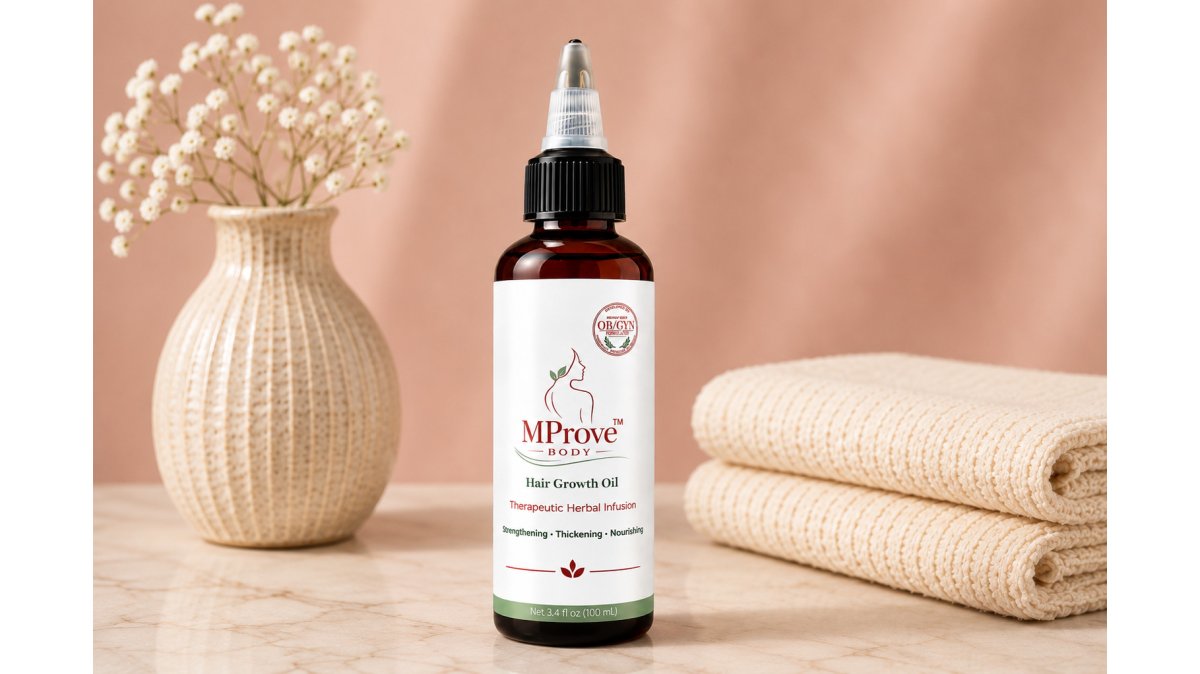
MProve Body Hair Growth Oil was formulated by a board-certified OB/GYN with a background in chemistry. It blends rosemary, amla, bhringraj, brahmi, moringa, black seed, and fenugreek with jojoba, sweet almond, coconut, and batana oils, plus vitamin E.

Directions for use:
It is free from mineral oil, parabens, phthalates, and artificial dyes. For wider postpartum recovery support, see our guide on postpartum hair recovery. You can also shop the Hair Growth Oil directly.
Keep oil off the breasts and nipples, wash hands after applying, and avoid leaving oil on hair that your baby's face rests against. If you are unsure about a specific ingredient, check with your OB/GYN or a lactation consultant before regular use.
Postpartum shedding is largely driven by hormone shifts after delivery, and most women see regrowth without treatment. Hair oil does not change that hormonal process. Think of it as supportive scalp care rather than a cure. If shedding continues past about six months or you notice patchy loss, ask your doctor.
For most women, yes. Shedding usually slows as hormone levels stabilize after delivery. Oils and scalp care do not replace that natural hormonal reset. Persistent or worsening thinning beyond a year is worth a medical review.
Book an appointment if shedding is patchy rather than diffuse, if you see scalp-level bald spots, if loss continues past twelve months, or if you have other symptoms like fatigue, unusual weight changes, or thyroid concerns. These are worth discussing with a doctor, who can advise on appropriate testing. A doctor can also advise on whether a hair oil fits safely into your routine while breastfeeding.
Postpartum thinning is temporary for most women, but the wait is easier when your scalp feels cared for. We built MProve Body Hair Growth Oil for exactly this stage: OB/GYN-founded, made from the ground up, and gentle enough for a low-effort routine. Get started with MProve Body and give your scalp the support it needs through recovery.


